Massola, Gustavo Author
Biography not available.

Browse all FOLKLORE books
Browse all GARDENS books
Browse all GRAPHIC NOVELS books
Browse all HISTORY - MEDIEVAL books
Browse all HUMOUR books
Browse all Juvenile Fiction : Biographical - Other books
Browse all Juvenile Fiction : Historical - Other books
Browse all Juvenile Fiction : Legends, Myths, & Fables - Other books
Browse all Juvenile Fiction : People & Places - Other books
Browse all Juvenile Fiction : People & Places - United States - Other books
Browse all Juvenile Fiction : Religious - Other books
Browse all Juvenile Nonfiction : History - Other books
Browse all Juvenile Nonfiction : Mathematics - Advanced books
Browse all Juvenile Nonfiction : People & Places - Other books
Browse all Juvenile Nonfiction : People & Places - United States - Othe books
Browse all LITERARY STUDIES books
Browse all LONDON books
Browse all Medical : Nursing - Mental Health books
Browse all MIND books
Browse all MUSEOLOGY books
Browse all NON-CLASSIFIABLE books
Browse all NONLINEAR SCIENCE books
Browse all POPULAR SCIENCE books
Browse all RELIGIOUS STUDIES books
Browse all SPIRIT books
Browse all SPORT books
Browse all TRAVEL WRITING books
 Out of Stock
Paperback · ISBN 9786208718084
Inclusive of GST and other taxes
Arriving at your doorstep in 10-15 days
Our logisitcs team will make sure everyitem is delivered safely
| ISBN | 9786208718084 |
|---|---|
| Publisher | Our Knowledge Publishing |
| Publication date | March 2025 |
| Language | English |
| MRP | £86.04 GBP |
| Page count | 408 |
| Item weight | 120 g |
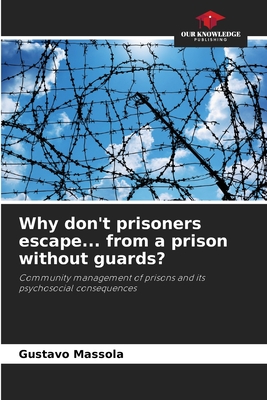
Since the first of January 1996, the Bragança Paulista Public Prison (São Paulo) has been run by a non-profit civil association called Associação de Proteção e Assistência Carcerária (APAC) and has come to be seen as a successful example of prison administration, capable of promoting the re-socialization of prisoners. The association's volunteers, organized into working groups, began to live closely with the prisoners. Order was maintained by an alliance between volunteers and prison leaders. Transfer to another unit was used as the ultimate punitive ceremony and implied the need for a "failed" prison system to be used as a threat to prisoners. Its operation resulted in greater critical capacity for prisoners, but without greater autonomy of choice. The subsequent conversion of the public prison into a Resocialization Centre implied a re-appropriation of this experience by the state. The consequent formalization of daily prison life has made it clear that contacts with volunteers previously had transformative connotations, and thus contradicted the penal system.
Log in to write a review for this book.
No reviews yet. Be the first to share your opinion.
Biography not available.