TAMBWE HERI, David Author
Biography not available.

Browse all FOLKLORE books
Browse all GARDENS books
Browse all GRAPHIC NOVELS books
Browse all HISTORY - MEDIEVAL books
Browse all HUMOUR books
Browse all Juvenile Fiction : Biographical - Other books
Browse all Juvenile Fiction : Historical - Other books
Browse all Juvenile Fiction : Legends, Myths, & Fables - Other books
Browse all Juvenile Fiction : People & Places - Other books
Browse all Juvenile Fiction : People & Places - United States - Other books
Browse all Juvenile Fiction : Religious - Other books
Browse all Juvenile Nonfiction : History - Other books
Browse all Juvenile Nonfiction : Mathematics - Advanced books
Browse all Juvenile Nonfiction : People & Places - Other books
Browse all Juvenile Nonfiction : People & Places - United States - Othe books
Browse all LITERARY STUDIES books
Browse all LONDON books
Browse all Medical : Nursing - Mental Health books
Browse all MIND books
Browse all MUSEOLOGY books
Browse all NON-CLASSIFIABLE books
Browse all NONLINEAR SCIENCE books
Browse all POPULAR SCIENCE books
Browse all RELIGIOUS STUDIES books
Browse all SPIRIT books
Browse all SPORT books
Browse all TRAVEL WRITING books
 Out of Stock
Paperback · ISBN 9786208947293
Inclusive of GST and other taxes
Arriving at your doorstep in 10-15 days
Our logisitcs team will make sure everyitem is delivered safely
| ISBN | 9786208947293 |
|---|---|
| Publisher | Our Knowledge Publishing |
| Publication date | June 2025 |
| Language | English |
| MRP | £69.51 GBP |
| Page count | 136 |
| Item weight | 43 g |
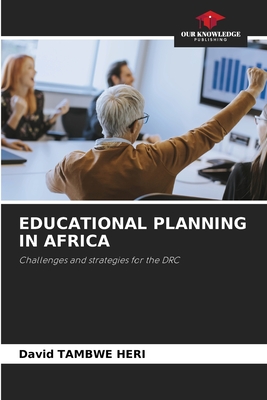
This book offers an in-depth analysis of contemporary issues in educational planning with a focus on the DRC, from a systemic and forward-looking perspective. and prospective perspective. Based on a rigorous theoretical framework, the author questions the dominant paradigms of educational governance, articulating the demographic, economic, technological and socio-political dimensions which condition the formulation and implementation of public policies policies. A critical analysis of current reforms - notably free basic education of basic education - highlights the tensions between quantitative expansion quality of educational provision, while also highlighting the structural structural dysfunctions linked to administrative centralization, regional regional disparities and inadequate infrastructure. The author formulates innovative, contextualized and sustainable strategies for overhauling educational planning in line with the imperatives of sustainable development, equity and inclusion. This book is a heuristic tool for researchers researchers, decision-makers and practitioners involved in transforming African African education systems.
Log in to write a review for this book.
No reviews yet. Be the first to share your opinion.
Biography not available.