Quoc, Nguyen Anh Author
Biography not available.

Browse all FOLKLORE books
Browse all GARDENS books
Browse all GRAPHIC NOVELS books
Browse all HISTORY - MEDIEVAL books
Browse all HUMOUR books
Browse all Juvenile Fiction : Biographical - Other books
Browse all Juvenile Fiction : Historical - Other books
Browse all Juvenile Fiction : Legends, Myths, & Fables - Other books
Browse all Juvenile Fiction : People & Places - Other books
Browse all Juvenile Fiction : People & Places - United States - Other books
Browse all Juvenile Fiction : Religious - Other books
Browse all Juvenile Nonfiction : History - Other books
Browse all Juvenile Nonfiction : Mathematics - Advanced books
Browse all Juvenile Nonfiction : People & Places - Other books
Browse all Juvenile Nonfiction : People & Places - United States - Othe books
Browse all LITERARY STUDIES books
Browse all LONDON books
Browse all Medical : Nursing - Mental Health books
Browse all MIND books
Browse all MUSEOLOGY books
Browse all NON-CLASSIFIABLE books
Browse all NONLINEAR SCIENCE books
Browse all POPULAR SCIENCE books
Browse all RELIGIOUS STUDIES books
Browse all SPIRIT books
Browse all SPORT books
Browse all TRAVEL WRITING books
 Out of Stock
Paperback · ISBN 9786209961571
Inclusive of GST and other taxes
Arriving at your doorstep in 10-15 days
Our logisitcs team will make sure everyitem is delivered safely
| ISBN | 9786209961571 |
|---|---|
| Publisher | LAP Lambert Academic Publishing |
| Publication date | May 2026 |
| Language | English |
| MRP | £87.78 GBP |
| Page count | 308 |
| Item weight | 92 g |
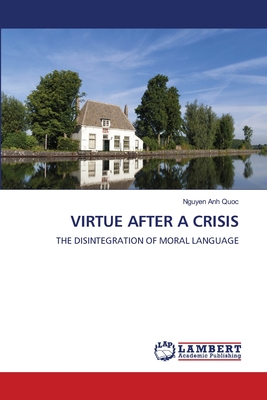
The book examines the crisis of modern moral life, in which concepts such as justice, freedom, rights, responsibility, dignity, equality, and the common good remain widely used yet are increasingly detached from the practices that once gave them meaning. The crisis lies not in the disappearance of morality, but in the fragmentation of normative language, the weakening of practical reason, and the absence of a common foundation of judgment. Through the analysis of moral dissonance, emotionalism, tradition, social practice, justice, and personal freedom, the book shows that modern man is caught up in market, technocratic, and governance structures in which human relations are reduced to data, benefits, profiles, and performance. In this context, virtue is restored as the capacity to maintain the intrinsic purpose of practice, to judge in conflict, to take responsibility for the consequences, and to defend humanity against the tendency to materialize life. Virtue thus becomes the foundation for the reconstruction of common life and opens up new moral possibilities after the crisis of norms.
Log in to write a review for this book.
No reviews yet. Be the first to share your opinion.
Biography not available.