Fröderberg, J. E. Author
Biography not available.

Browse all FOLKLORE books
Browse all GARDENS books
Browse all GRAPHIC NOVELS books
Browse all HISTORY - MEDIEVAL books
Browse all HUMOUR books
Browse all Juvenile Fiction : Biographical - Other books
Browse all Juvenile Fiction : Historical - Other books
Browse all Juvenile Fiction : Legends, Myths, & Fables - Other books
Browse all Juvenile Fiction : People & Places - Other books
Browse all Juvenile Fiction : People & Places - United States - Other books
Browse all Juvenile Fiction : Religious - Other books
Browse all Juvenile Nonfiction : History - Other books
Browse all Juvenile Nonfiction : Mathematics - Advanced books
Browse all Juvenile Nonfiction : People & Places - Other books
Browse all Juvenile Nonfiction : People & Places - United States - Othe books
Browse all LITERARY STUDIES books
Browse all LONDON books
Browse all Medical : Nursing - Mental Health books
Browse all MIND books
Browse all MUSEOLOGY books
Browse all NON-CLASSIFIABLE books
Browse all NONLINEAR SCIENCE books
Browse all POPULAR SCIENCE books
Browse all RELIGIOUS STUDIES books
Browse all SPIRIT books
Browse all SPORT books
Browse all TRAVEL WRITING books
 Out of Stock
Paperback · ISBN 9789199127026
Inclusive of GST and other taxes
Arriving at your doorstep in 10-15 days
Our logisitcs team will make sure everyitem is delivered safely
| ISBN | 9789199127026 |
|---|---|
| Publisher | Auteur Visuel |
| Publication date | September 2026 |
| Language | English |
| MRP | £19.50 GBP |
| Page count | 182 |
| Item weight | 56 g |
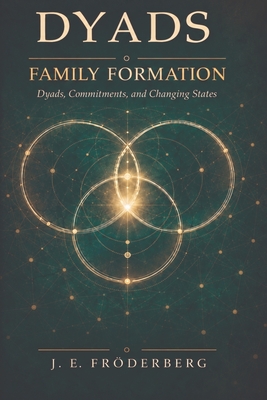
What if family formation is understood not as a sequence of isolated choices, but as a series of commitments made from changing relational states?
Family Formation: Dyads, Commitments, and Changing States examines how intimate relationships move from possibility to dyad, from partnership to parenthood commitment, and from anticipated family life to the realities of carrying a family through time.
Rather than treating fertility, partnership, organisation, support, and strain as separate problems, the book follows how they become connected across changing states of information, responsibility, and constraint.
Through recurring cases and structural analysis, it examines partner selection and dyad formation; commitment and prospective parenthood; anticipated versus experienced family life; organisation, buffering, regulation, and adaptation; later family-expansion decisions; accumulated commitments and support ecology; and the boundary between collaborative strain and problems requiring a different analytic model.
The book does not prescribe a correct family form, ideal division of roles, or preferred reproductive outcome. Its purpose is to make visible the structures through which different family trajectories become possible, difficult, sustainable, or no longer adequately described by the same model.
For students, researchers, study circles, and reflective readers interested in relationships, family formation, demography, and social systems.
Log in to write a review for this book.
No reviews yet. Be the first to share your opinion.
Biography not available.