Gavora, J. Editor
Biography not available.

Browse all FOLKLORE books
Browse all GARDENS books
Browse all GRAPHIC NOVELS books
Browse all HISTORY - MEDIEVAL books
Browse all HUMOUR books
Browse all Juvenile Fiction : Biographical - Other books
Browse all Juvenile Fiction : Historical - Other books
Browse all Juvenile Fiction : Legends, Myths, & Fables - Other books
Browse all Juvenile Fiction : People & Places - Other books
Browse all Juvenile Fiction : People & Places - United States - Other books
Browse all Juvenile Fiction : Religious - Other books
Browse all Juvenile Nonfiction : History - Other books
Browse all Juvenile Nonfiction : Mathematics - Advanced books
Browse all Juvenile Nonfiction : People & Places - Other books
Browse all Juvenile Nonfiction : People & Places - United States - Othe books
Browse all LITERARY STUDIES books
Browse all LONDON books
Browse all Medical : Nursing - Mental Health books
Browse all MIND books
Browse all MUSEOLOGY books
Browse all NON-CLASSIFIABLE books
Browse all NONLINEAR SCIENCE books
Browse all POPULAR SCIENCE books
Browse all RELIGIOUS STUDIES books
Browse all SPIRIT books
Browse all SPORT books
Browse all TRAVEL WRITING books
 Out of Stock
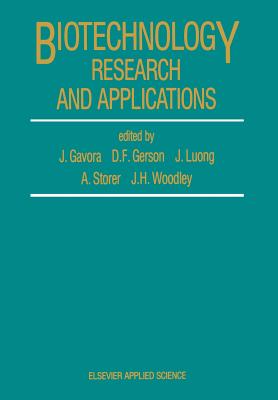
BIOTECHNOLOGY RESEARCH & APPLI
Paperback · ISBN 9789401071116
Inclusive of GST and other taxes
Arriving at your doorstep in 10-15 days
Our logisitcs team will make sure everyitem is delivered safely
| ISBN | 9789401071116 |
|---|---|
| Subtitle | BIOTECHNOLOGY RESEARCH & APPLI |
| Publisher | Springer |
| Publication date | September 2011 |
| Language | English |
| MRP | £44.99 GBP |
| Page count | 332 |
| Item weight | 117 g |
Historically, ruminant animals have provided farmers with the ability to utilize marginal lands for the production of high quality food for human consumption. Ruminants are able to derive their nourishment from feeds that are not in themselves capable of meeting the nutritional needs of the animal. They do this by supporting in the rumen, which is a greatly enlarged region of the stomach which precedes the animals digestive system, a microbial fermentation system. This system partially degrades complex polysaccharides and provides to the animal not only the degradation products (chiefly volatile fatty acids), but also secondary microbial metabolites and microbial biomass (most importantly microbial protein, which can be synthetized from inorganic nitrogen sources). A ruminant animal is able to survive, if not thrive, on a diet containing only cellulose, a non-protein nitrogen source such as urea, and trace minerals. The capacity of the rumen to process low quality feeds is limited by factors such as rumen volume, the time required for digestion of these feeds in the rumen, and the ability of the animal to chew the feed. Hodern ruminant animals have been intensively selected for high production potential, but the limited capacity of the rumen fermentation means that this potential cannot be realized by feeding the animal low quality feeds. The high production potential of these animals can only be realized by feeding large amounts of readily digestible, high quality feeds such as oilseed meals and grains.
Log in to write a review for this book.
No reviews yet. Be the first to share your opinion.
Biography not available.
Biography not available.
Biography not available.