Banerjee, Asis Kumar Author
Biography not available.

Browse all FOLKLORE books
Browse all GARDENS books
Browse all GRAPHIC NOVELS books
Browse all HISTORY - MEDIEVAL books
Browse all HUMOUR books
Browse all Juvenile Fiction : Biographical - Other books
Browse all Juvenile Fiction : Historical - Other books
Browse all Juvenile Fiction : Legends, Myths, & Fables - Other books
Browse all Juvenile Fiction : People & Places - Other books
Browse all Juvenile Fiction : People & Places - United States - Other books
Browse all Juvenile Fiction : Religious - Other books
Browse all Juvenile Nonfiction : History - Other books
Browse all Juvenile Nonfiction : Mathematics - Advanced books
Browse all Juvenile Nonfiction : People & Places - Other books
Browse all Juvenile Nonfiction : People & Places - United States - Othe books
Browse all LITERARY STUDIES books
Browse all LONDON books
Browse all Medical : Nursing - Mental Health books
Browse all MIND books
Browse all MUSEOLOGY books
Browse all NON-CLASSIFIABLE books
Browse all NONLINEAR SCIENCE books
Browse all POPULAR SCIENCE books
Browse all RELIGIOUS STUDIES books
Browse all SPIRIT books
Browse all SPORT books
Browse all TRAVEL WRITING books
 Out of Stock
Paperback · ISBN 9789811561634
Inclusive of GST and other taxes
Arriving at your doorstep in 10-15 days
Our logisitcs team will make sure everyitem is delivered safely
| ISBN | 9789811561634 |
|---|---|
| Publisher | Springer |
| Publication date | June 2021 |
| Language | English |
| MRP | £99.99 GBP |
| Page count | 254 |
| Item weight | 80 g |
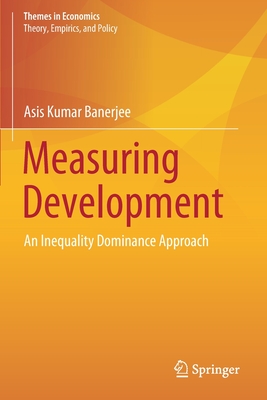
An excerpt from the book's Foreword: "[This book] is a comprehensive and valuable contribution to the literature on the measurement of inequality and the use of such measurement in the assessment of social welfare. I believe that it will be of much interest to researchers working on measures of inequality and social welfare as well as advanced graduate students who are looking for a solid introduction to this important area of normative economics."
- Prof. Prasanta K. Pattanaik, University of California, Riverside, California, U.S.A.
Log in to write a review for this book.
No reviews yet. Be the first to share your opinion.
Biography not available.