GONZALO JULIO A Author
Biography not available.

Browse all FOLKLORE books
Browse all GARDENS books
Browse all GRAPHIC NOVELS books
Browse all HISTORY - MEDIEVAL books
Browse all HUMOUR books
Browse all Juvenile Fiction : Biographical - Other books
Browse all Juvenile Fiction : Historical - Other books
Browse all Juvenile Fiction : Legends, Myths, & Fables - Other books
Browse all Juvenile Fiction : People & Places - Other books
Browse all Juvenile Fiction : People & Places - United States - Other books
Browse all Juvenile Fiction : Religious - Other books
Browse all Juvenile Nonfiction : History - Other books
Browse all Juvenile Nonfiction : Mathematics - Advanced books
Browse all Juvenile Nonfiction : People & Places - Other books
Browse all Juvenile Nonfiction : People & Places - United States - Othe books
Browse all LITERARY STUDIES books
Browse all LONDON books
Browse all Medical : Nursing - Mental Health books
Browse all MIND books
Browse all MUSEOLOGY books
Browse all NON-CLASSIFIABLE books
Browse all NONLINEAR SCIENCE books
Browse all POPULAR SCIENCE books
Browse all RELIGIOUS STUDIES books
Browse all SPIRIT books
Browse all SPORT books
Browse all TRAVEL WRITING books
 Out of Stock
Hardback · ISBN 9789813140998
Inclusive of GST and other taxes
Arriving at your doorstep in 10-15 days
Our logisitcs team will make sure everyitem is delivered safely
| ISBN | 9789813140998 |
|---|---|
| Publisher | World Scientific |
| Publication date | June 2016 |
| Language | English |
| MRP | £73.00 GBP |
| Page count | 176 |
| Item weight | 90 g |
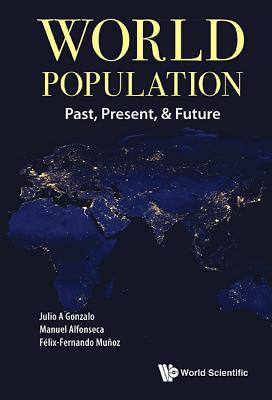
World Population: Past, Present,&Future uses a multidisciplinary approach to investigate in depth on important aspects of the evolution of world population not well addressed previously. The authors from the Universidad Autonoma, Madrid (Spain), professors Julio A Gonzalo, Manuel Alfonseca, and F�lix-Fernando Mu�oz, point out that the recent pronounced growth in world population (accompanied by an even more pronounced growth in agricultural production) was due mainly to the increase of life expectancy and not to the (inexistent) growth in fertility rate. Using a "rate equations" approach for the first time, they describe population trends and forecast the possibility of steps up (or down) in population rather than the exponential growth predicted by UN demographers around 1985 and thereafter. This book provides a new perspective that our planet is not overpopulated and could, in fact, house a considerably larger population.
Log in to write a review for this book.
No reviews yet. Be the first to share your opinion.
Biography not available.