LEBRUN JEAN-LUC Author
Biography not available.

Browse all FOLKLORE books
Browse all GARDENS books
Browse all GRAPHIC NOVELS books
Browse all HISTORY - MEDIEVAL books
Browse all HUMOUR books
Browse all Juvenile Fiction : Biographical - Other books
Browse all Juvenile Fiction : Historical - Other books
Browse all Juvenile Fiction : Legends, Myths, & Fables - Other books
Browse all Juvenile Fiction : People & Places - Other books
Browse all Juvenile Fiction : People & Places - United States - Other books
Browse all Juvenile Fiction : Religious - Other books
Browse all Juvenile Nonfiction : History - Other books
Browse all Juvenile Nonfiction : Mathematics - Advanced books
Browse all Juvenile Nonfiction : People & Places - Other books
Browse all Juvenile Nonfiction : People & Places - United States - Othe books
Browse all LITERARY STUDIES books
Browse all LONDON books
Browse all Medical : Nursing - Mental Health books
Browse all MIND books
Browse all MUSEOLOGY books
Browse all NON-CLASSIFIABLE books
Browse all NONLINEAR SCIENCE books
Browse all POPULAR SCIENCE books
Browse all RELIGIOUS STUDIES books
Browse all SPIRIT books
Browse all SPORT books
Browse all TRAVEL WRITING books
 Out of Stock
Hardback · ISBN 9789814350594
Inclusive of GST and other taxes
Arriving at your doorstep in 10-15 days
Our logisitcs team will make sure everyitem is delivered safely
| ISBN | 9789814350594 |
|---|---|
| Publisher | World Scientific |
| Publication date | August 2011 |
| Language | English |
| MRP | £65.00 GBP |
| Page count | 282 |
| Item weight | 121 g |
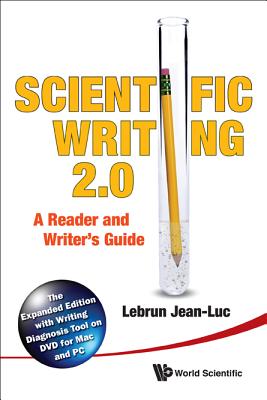
The book helps scientists write papers for scientific journals. Using the key parts of typical scientific papers (Title, Abstract, Introduction, Visuals, Structure, and Conclusions), it shows through numerous examples, how to achieve the essential qualities required in scientific writing, namely being clear, concise, convincing, fluid, interesting, and organized. To enable the writer to assess whether these parts are well written from a reader's perspective, the book also offers practical metrics in the form of six checklists, and even an original Java application to assist in the evaluation.The focus of the book is on self- and reader-assisted assessment of the scientific journal article. It is also the first time that a book on scientific writing takes a human factor view of the reading task and the reader scientist. By revealing and addressing the physiological causes that create substantial reading difficulties, namely limited reader memory, attention span, and patience, the book guarantees that writing will gain the much coveted reader-centered quality.
Log in to write a review for this book.
No reviews yet. Be the first to share your opinion.
Biography not available.