Penrose, Alessia Author
Biography not available.

Browse all FOLKLORE books
Browse all GARDENS books
Browse all GRAPHIC NOVELS books
Browse all HISTORY - MEDIEVAL books
Browse all HUMOUR books
Browse all Juvenile Fiction : Biographical - Other books
Browse all Juvenile Fiction : Historical - Other books
Browse all Juvenile Fiction : Legends, Myths, & Fables - Other books
Browse all Juvenile Fiction : People & Places - Other books
Browse all Juvenile Fiction : People & Places - United States - Other books
Browse all Juvenile Fiction : Religious - Other books
Browse all Juvenile Nonfiction : History - Other books
Browse all Juvenile Nonfiction : Mathematics - Advanced books
Browse all Juvenile Nonfiction : People & Places - Other books
Browse all Juvenile Nonfiction : People & Places - United States - Othe books
Browse all LITERARY STUDIES books
Browse all LONDON books
Browse all Medical : Nursing - Mental Health books
Browse all MIND books
Browse all MUSEOLOGY books
Browse all NON-CLASSIFIABLE books
Browse all NONLINEAR SCIENCE books
Browse all POPULAR SCIENCE books
Browse all RELIGIOUS STUDIES books
Browse all SPIRIT books
Browse all SPORT books
Browse all TRAVEL WRITING books
 Out of Stock
Paperback · ISBN 9798160037738
Inclusive of GST and other taxes
Arriving at your doorstep in 10-15 days
Our logisitcs team will make sure everyitem is delivered safely
| ISBN | 9798160037738 |
|---|---|
| Publisher | Independently published |
| Publication date | October 2026 |
| Language | English |
| MRP | £13.99 GBP |
| Page count | 140 |
| Item weight | 44 g |
I made myself a promise a long time ago: my daughter would never feel the way I felt growing up.
Then one Tuesday evening, over a spilled glass of juice, I heard my mother's words come out of my mouth.
If you've ever made a promise like that, you know exactly how it feels to hear yourself break it.
"What is wrong with you? Why can't you just be careful for once?"
My daughter didn't cry. She went quiet, that careful quiet kids learn when they're trying not to make a grown-up more upset. I had lived inside that quiet. And now I was the reason for it.
Let me be real with you. That night I was scared of something way bigger than one bad moment. I was scared that the thing I swore would end with me was quietly continuing through me.
Your version might not involve a kid at all.
It might be the fight with your partner that sounds just like your parents' fights. Pulling away when someone needs you. Saying sorry for things that were never yours to carry. Hearing a family put-down in your own voice. If you've been working on healing intergenerational trauma, you know the fear underneath it all: I don't want to pass this on.
Before: I believed breaking the cycle meant never repeating it. I thought understanding my childhood would keep it out of my daughter's.
I had read the books. I knew my triggers. And when I was tired and stretched thin, the old words came out anyway. Sitting on the bathroom floor that night, after I apologized, I realized my idea of success had only one way to pass. And I had just failed it.
So I started studying what happens between understanding a pattern and interrupting it, and what research on families, parenting, habits, and repair says about real change.
And what I found? More hopeful, and more honest, than "never again."
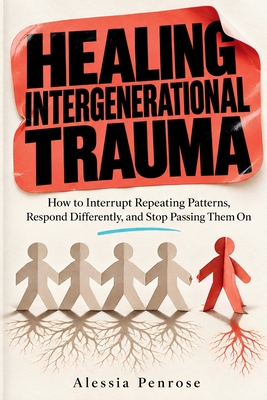
Family history can raise risk. It doesn't decide the ending. In large studies of parents who had been mistreated as kids, the ones who broke the cycle outnumbered the ones who repeated it. And the way parents respond can change with teaching and practice.
The bridge: I put what I learned into Pattern Exit, the move from "I know why I do this" to "I can choose what I do next." It works in the moment the old reaction starts, and in the moment after, when it wins anyway. Because the measure of change isn't never slipping. It's what happens next.
So why don't we hear that more often? Because "break the cycle" is easy to picture as one clean line. Real change looks like catching it sooner, bouncing back faster, and repairing more cleanly.
Inside, you'll discover:
‣ What the famous "still face" experiment really shows, and why it isn't only about damage (Chapter 14)
‣ Why doing the opposite of your parent isn't automatically the healthy choice (Chapter 7)
‣ What to do after the old reaction wins, including the apology that accidentally asks the person you hurt to comfort you (Chapter 13)
‣ A one-week practice page that turns ordinary moments, good and bad, into proof of progress (Appendix)
After: I still make mistakes. But sometimes I catch the reaction. Sometimes I pause. Sometimes I choose a different sentence. And sometimes I apologize and start again, without deciding the whole effort was a lie.
Picture the next ordinary spill, slammed door, or tense phone call. The rush comes. But this time, something different gets passed on: a pause, a calmer sentence, or an honest repair.
This book is for anyone who wants their past to stop writing their present relationships. It doesn't promise perfect parenting, a cure, or that every cycle ends.
You can keep measuring yourself against never getting it wrong. Or you can start practicing what comes next.
Sometimes the difference starts with one sentence. Sometimes it starts with what you do after the wrong one.
Log in to write a review for this book.
No reviews yet. Be the first to share your opinion.
Biography not available.