Dialogue, Lucid Author
Biography not available.

Browse all FOLKLORE books
Browse all GARDENS books
Browse all GRAPHIC NOVELS books
Browse all HISTORY - MEDIEVAL books
Browse all HUMOUR books
Browse all Juvenile Fiction : Biographical - Other books
Browse all Juvenile Fiction : Historical - Other books
Browse all Juvenile Fiction : Legends, Myths, & Fables - Other books
Browse all Juvenile Fiction : People & Places - Other books
Browse all Juvenile Fiction : People & Places - United States - Other books
Browse all Juvenile Fiction : Religious - Other books
Browse all Juvenile Nonfiction : History - Other books
Browse all Juvenile Nonfiction : Mathematics - Advanced books
Browse all Juvenile Nonfiction : People & Places - Other books
Browse all Juvenile Nonfiction : People & Places - United States - Othe books
Browse all LITERARY STUDIES books
Browse all LONDON books
Browse all Medical : Nursing - Mental Health books
Browse all MIND books
Browse all MUSEOLOGY books
Browse all NON-CLASSIFIABLE books
Browse all NONLINEAR SCIENCE books
Browse all POPULAR SCIENCE books
Browse all RELIGIOUS STUDIES books
Browse all SPIRIT books
Browse all SPORT books
Browse all TRAVEL WRITING books
 Out of Stock
Paperback · ISBN 9798170381852
Inclusive of GST and other taxes
Arriving at your doorstep in 10-15 days
Our logisitcs team will make sure everyitem is delivered safely
| ISBN | 9798170381852 |
|---|---|
| Publisher | Independently published |
| Publication date | August 2026 |
| Language | English |
| MRP | £13.99 GBP |
| Page count | 196 |
| Item weight | 60 g |
You know what you need to say. The difficult part is knowing what to say next.
A difficult conversation rarely follows the script in your head. The other person gets defensive. They disagree. They turn the issue back on you. They become angry, upset, or silent. Suddenly, the perfect opening line you rehearsed isn't enough.
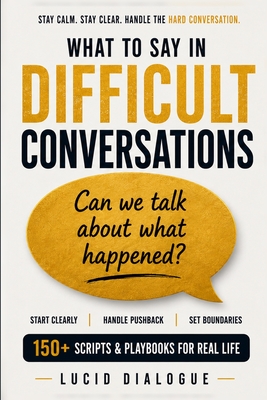
What to Say in Difficult Conversations is a practical guide to handling the moments when conversations become uncomfortable, unpredictable, and hard to navigate.
Instead of vague advice about "communicating better," you'll learn exactly how to:
- Start difficult conversations without attacking or overexplaining
- Say what needs to be said clearly and calmly
- Respond when someone becomes defensive
- Handle counterattacks such as "You do it too"
- Give criticism without making it personal
- Receive criticism without immediately becoming defensive
- Set boundaries and hold them when someone pushes back
- Deal with anger, tears, silence, and emotional reactions
- Apologize properly without abandoning the original issue
- Handle difficult conversations with managers, coworkers, partners, friends, and family
- Know when to continue, pause, end, or escalate a conversation
You'll also get 150+ practical scripts and conversation playbooks for situations involving conflict, criticism, boundaries, money, workload, relationships, family expectations, disagreements, apologies, and more.
At the heart of the book is one simple question:
What is the next useful sentence?
You don't need to memorize the perfect speech or control how another person reacts. You need enough clarity to begin, enough structure to stay with what matters, and enough confidence to choose what to say next.
Clearer conversations. Stronger boundaries. Less avoidance.
If you've ever known that you needed to say something but kept putting the conversation off because you didn't know how it would go, this book is for you.
Log in to write a review for this book.
No reviews yet. Be the first to share your opinion.
Biography not available.