Onstott, Scott Author
Biography not available.

Browse all FOLKLORE books
Browse all GARDENS books
Browse all GRAPHIC NOVELS books
Browse all HISTORY - MEDIEVAL books
Browse all HUMOUR books
Browse all Juvenile Fiction : Biographical - Other books
Browse all Juvenile Fiction : Historical - Other books
Browse all Juvenile Fiction : Legends, Myths, & Fables - Other books
Browse all Juvenile Fiction : People & Places - Other books
Browse all Juvenile Fiction : People & Places - United States - Other books
Browse all Juvenile Fiction : Religious - Other books
Browse all Juvenile Nonfiction : History - Other books
Browse all Juvenile Nonfiction : Mathematics - Advanced books
Browse all Juvenile Nonfiction : People & Places - Other books
Browse all Juvenile Nonfiction : People & Places - United States - Othe books
Browse all LITERARY STUDIES books
Browse all LONDON books
Browse all Medical : Nursing - Mental Health books
Browse all MIND books
Browse all MUSEOLOGY books
Browse all NON-CLASSIFIABLE books
Browse all NONLINEAR SCIENCE books
Browse all POPULAR SCIENCE books
Browse all RELIGIOUS STUDIES books
Browse all SPIRIT books
Browse all SPORT books
Browse all TRAVEL WRITING books
 Out of Stock
Paperback · ISBN 9798171997830
Inclusive of GST and other taxes
Arriving at your doorstep in 10-15 days
Our logisitcs team will make sure everyitem is delivered safely
| ISBN | 9798171997830 |
|---|---|
| Publisher | Independently published |
| Publication date | October 2026 |
| Language | English |
| MRP | £14.99 GBP |
| Page count | 242 |
| Item weight | 73 g |
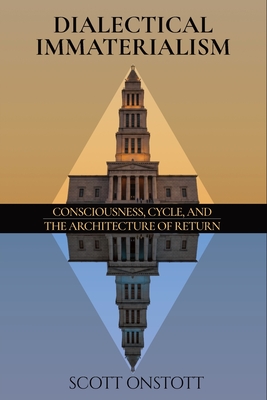
Dialectical Immaterialism names this structure and traces it across four registers: the philosophy of mind, the geometry of the three-pole cycle, the architecture of individual development, and the history of institutions and civilizations. The argument is developed on a specific philosophical ground: consciousness is not a product of the physical world but the ground in which it arises. That position is not the book's destination. It is the stable platform from which the structural analysis is conducted without importing assumptions that would decide the argument before it begins.
The book traces the mechanism through two movements of equal architectural weight. The outbreath is the progressive development of the capacity to observe the structures that organize experience rather than simply to live inside them. It is the movement toward the witnessing position that philosophy, psychology, and contemplative traditions across cultures have documented in different vocabularies over centuries. The inbreath is the return to full engagement with the cycle from the witnessing position, with the cycle perceived. Most accounts of development describe the outbreath in detail and treat the witnessing position as the endpoint. Dialectical Immaterialism's central argument is that the witnessing position is the halfway mark, the turning point at which the second movement becomes available, not the destination at which the journey rests.
The Engine: The antithesis is not imposed from outside the thesis. It is generated by the thesis reaching the limit of its own success. This mechanism is structural and has no villains. It does not require failure, corruption, or bad leadership. It requires only that the thesis be genuinely and thoroughly successful.
The Two Movements: Most accounts of consciousness, development, and spiritual maturation describe one movement: the progressive loosening of identification with habitual structures of experience and the ascent toward the witnessing position. That movement is real, and Part II traces its geometry. What most accounts omit is the second movement of equal structural weight: the return to full engagement with the cycle from the witnessing position, with the cycle perceived. Both movements are required. The breath that only exhales is not a breath at all.
The Witnessing Position: The clarity of the witnessing position is genuine. The peace is real. The perspective it provides, looking across the cycle with its three poles visible as poles rather than experienced as fates, is not an illusion. The traditions have, in many formulations, treated it as the endpoint of development. Dialectical Immaterialism's argument is that they have its location wrong. It is the peak of the outbreath, the moment of maximum extension before the direction changes, and the structural prerequisite of the second movement.
Log in to write a review for this book.
No reviews yet. Be the first to share your opinion.
Biography not available.