Gentry, Stephanie Author
Biography not available.

Browse all FOLKLORE books
Browse all GARDENS books
Browse all GRAPHIC NOVELS books
Browse all HISTORY - MEDIEVAL books
Browse all HUMOUR books
Browse all Juvenile Fiction : Biographical - Other books
Browse all Juvenile Fiction : Historical - Other books
Browse all Juvenile Fiction : Legends, Myths, & Fables - Other books
Browse all Juvenile Fiction : People & Places - Other books
Browse all Juvenile Fiction : People & Places - United States - Other books
Browse all Juvenile Fiction : Religious - Other books
Browse all Juvenile Nonfiction : History - Other books
Browse all Juvenile Nonfiction : Mathematics - Advanced books
Browse all Juvenile Nonfiction : People & Places - Other books
Browse all Juvenile Nonfiction : People & Places - United States - Othe books
Browse all LITERARY STUDIES books
Browse all LONDON books
Browse all Medical : Nursing - Mental Health books
Browse all MIND books
Browse all MUSEOLOGY books
Browse all NON-CLASSIFIABLE books
Browse all NONLINEAR SCIENCE books
Browse all POPULAR SCIENCE books
Browse all RELIGIOUS STUDIES books
Browse all SPIRIT books
Browse all SPORT books
Browse all TRAVEL WRITING books
 Out of Stock
Paperback · ISBN 9798172068010
Inclusive of GST and other taxes
Arriving at your doorstep in 10-15 days
Our logisitcs team will make sure everyitem is delivered safely
| ISBN | 9798172068010 |
|---|---|
| Publisher | Independently published |
| Publication date | September 2026 |
| Language | English |
| MRP | £18.49 GBP |
| Page count | 286 |
| Item weight | 85 g |
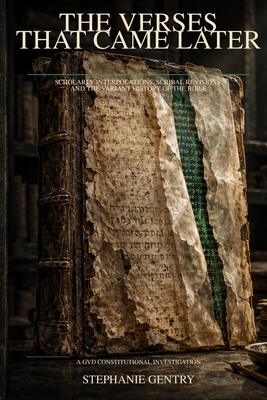
The Verses That Came Later investigates passages that textual critics identify as later additions, substitutions, expansions, or disputed textual units within the Bible's surviving manuscript traditions.
Rather than beginning with theology and working backward, Stephanie Gentry begins with the documentary record: Greek manuscripts, the Masoretic Text, the Septuagint, the Dead Sea Scrolls, early translations, patristic testimony, and the movement of readings across competing textual witnesses.
The investigation examines celebrated cases such as the Longer Ending of Mark, the woman taken in adultery, the Comma Johanneum, the angel at the pool of Bethesda, the bloody sweat in Gethsemane, Acts 8:37, the Pauline doxology, and the disputed command that women remain silent in church. It also evaluates larger questions concerning the infancy narratives of Matthew and Luke, Deuteronomy 32, Psalms 151, Isaiah's composite authorship, the Elephantine evidence, the Exodus and tabernacle traditions, and possible Christian intervention in Josephus.
Each case distinguishes:
This is neither an attack upon Scripture nor a defense written in advance of the evidence. It is a disciplined inquiry into how biblical texts were copied, transmitted, revised, preserved, and received.
Written for scholars, clergy, students, and serious lay readers, this volume provides the historical and methodological foundation needed to understand what textual criticism can establish-and where responsible judgment must stop.
Log in to write a review for this book.
No reviews yet. Be the first to share your opinion.
Biography not available.