Masoudi, Mehran Author
Biography not available.

Browse all FOLKLORE books
Browse all GARDENS books
Browse all GRAPHIC NOVELS books
Browse all HISTORY - MEDIEVAL books
Browse all HUMOUR books
Browse all Juvenile Fiction : Biographical - Other books
Browse all Juvenile Fiction : Historical - Other books
Browse all Juvenile Fiction : Legends, Myths, & Fables - Other books
Browse all Juvenile Fiction : People & Places - Other books
Browse all Juvenile Fiction : People & Places - United States - Other books
Browse all Juvenile Fiction : Religious - Other books
Browse all Juvenile Nonfiction : History - Other books
Browse all Juvenile Nonfiction : Mathematics - Advanced books
Browse all Juvenile Nonfiction : People & Places - Other books
Browse all Juvenile Nonfiction : People & Places - United States - Othe books
Browse all LITERARY STUDIES books
Browse all LONDON books
Browse all Medical : Nursing - Mental Health books
Browse all MIND books
Browse all MUSEOLOGY books
Browse all NON-CLASSIFIABLE books
Browse all NONLINEAR SCIENCE books
Browse all POPULAR SCIENCE books
Browse all RELIGIOUS STUDIES books
Browse all SPIRIT books
Browse all SPORT books
Browse all TRAVEL WRITING books
 Out of Stock
Paperback · ISBN 9798172817526
Inclusive of GST and other taxes
Arriving at your doorstep in 10-15 days
Our logisitcs team will make sure everyitem is delivered safely
| ISBN | 9798172817526 |
|---|---|
| Publisher | Independently published |
| Publication date | September 2026 |
| Language | English |
| MRP | £15.50 GBP |
| Page count | 270 |
| Item weight | 81 g |
Why do some projects fail before construction even begins?
The budget looks reasonable.
The schedule looks achievable.
The team is confident.
The kickoff meeting goes perfectly.
Then reality arrives.
The budget starts disappearing. The schedule slips. Risks become problems. Relationships become strained. And suddenly, everyone is asking the same question:
"How did we get here?"
After more than 20 years working on Engineering, Procurement, and Construction (EPC) projects across energy, water, infrastructure, and industrial sectors, the author has seen a recurring pattern: many project failures don't begin during execution. They begin much earlier-with decisions, assumptions, compromises, and warning signs that were accepted before the first major task even started.
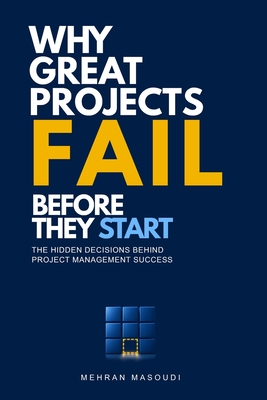
Why Great Projects Fail Before They Start explores the hidden decisions that shape project success long before construction begins.
This is not another textbook about project management software, scheduling techniques, or project management theory. It is a practical and experience-based look at the human decisions behind project planning, risk management, cost control, schedule management, procurement, contracts, stakeholder management, and project leadership.
Inside this book, you'll discover:
Why teams can become emotionally committed to a project before they have properly challenged its assumptions
How unrealistic budgets and aggressive bids create problems that execution teams are later expected to solve
Why a project can be "green" on the dashboard while quietly heading toward trouble
How impossible schedules become accepted as commitments
Why postponing decisions during planning can multiply problems during execution
How procurement and contract decisions can create tomorrow's claims
Why risk registers sometimes become exercises in documentation rather than real risk management
How groupthink, organizational politics, and fear of bad news influence project decisions
Why experienced professionals can repeat the same mistakes
Why activity and busyness are not the same as progress
How healthy skepticism and critical thinking can protect a project before problems become expensive
The book also examines a problem that is rarely discussed openly: people often know when something is wrong, but organizational pressure, optimism, politics, and fear of blame can make it difficult to say so.
The result is a practical lesson for project managers, engineers, project engineers, engineering managers, construction professionals, project controls specialists, procurement and contract professionals, project sponsors, executives, and anyone involved in planning or delivering capital projects.
You don't need to predict every problem.
You need to learn how to recognize the decisions that make problems more likely-and challenge them while you still have time, options, and influence.
Because the most expensive problems in a project are often the ones that were still cheap to fix.
Before you approve the next project, sign the next contract, accept the next estimate, or celebrate the next kickoff meeting, ask a better question.
The project may depend on it.
Log in to write a review for this book.
No reviews yet. Be the first to share your opinion.
Biography not available.