D, Sujatha Author
Biography not available.

Browse all FOLKLORE books
Browse all GARDENS books
Browse all GRAPHIC NOVELS books
Browse all HISTORY - MEDIEVAL books
Browse all HUMOUR books
Browse all Juvenile Fiction : Biographical - Other books
Browse all Juvenile Fiction : Historical - Other books
Browse all Juvenile Fiction : Legends, Myths, & Fables - Other books
Browse all Juvenile Fiction : People & Places - Other books
Browse all Juvenile Fiction : People & Places - United States - Other books
Browse all Juvenile Fiction : Religious - Other books
Browse all Juvenile Nonfiction : History - Other books
Browse all Juvenile Nonfiction : Mathematics - Advanced books
Browse all Juvenile Nonfiction : People & Places - Other books
Browse all Juvenile Nonfiction : People & Places - United States - Othe books
Browse all LITERARY STUDIES books
Browse all LONDON books
Browse all Medical : Nursing - Mental Health books
Browse all MIND books
Browse all MUSEOLOGY books
Browse all NON-CLASSIFIABLE books
Browse all NONLINEAR SCIENCE books
Browse all POPULAR SCIENCE books
Browse all RELIGIOUS STUDIES books
Browse all SPIRIT books
Browse all SPORT books
Browse all TRAVEL WRITING books
 Out of Stock
Paperback · ISBN 9798173297594
Inclusive of GST and other taxes
Arriving at your doorstep in 10-15 days
Our logisitcs team will make sure everyitem is delivered safely
| ISBN | 9798173297594 |
|---|---|
| Publisher | Independently published |
| Publication date | September 2026 |
| Language | English |
| MRP | £27.31 GBP |
| Page count | 426 |
| Item weight | 186 g |
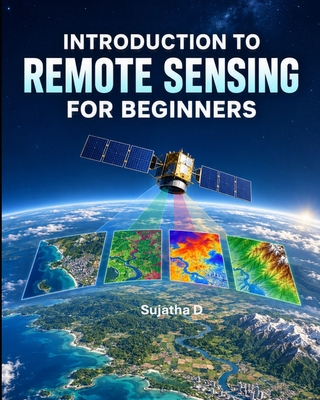
As we delve deeper into the subject, the interaction of electromagnetic radiation with the atmosphere becomes a critical consideration. Atmospheric conditions can significantly influence the quality and accuracy of remote sensing data, necessitating an understanding of scattering, absorption, and reflection processes. This knowledge is essential for selecting appropriate platforms and sensors, which vary widely in their capabilities and applications. From satellites orbiting the Earth to unmanned aerial vehicles, each platform offers distinct advantages and limitations, shaping the types of data that can be collected and the resolutions achievable.
The process of image acquisition is another vital aspect of remote sensing, involving the capture of data through various sensors. These sensors convert incoming electromagnetic radiation into digital signals, which are then processed to create images. The quality of these images is determined by several factors, including spatial, spectral, temporal, and radiometric resolution. Each resolution type plays a crucial role in defining the detail, color, frequency, and overall quality of the resulting data, influencing how effectively it can be used in subsequent analyses.
Once the data is collected, digital image processing techniques come into play, enabling the enhancement, filtering, and classification of images. These processes are essential for extracting meaningful information from raw data, allowing for visual interpretation and analysis. The ability to classify land cover, detect changes over time, and identify specific features enhances the utility of remote sensing in various applications, from environmental monitoring to urban planning. This analytical phase is often complemented by the integration of Geographic Information Systems (GIS), which adds a spatial dimension to the analysis, allowing for more comprehensive decision-making.
Practical project design is a critical skill for anyone entering the field of remote sensing, as it involves the planning and execution of projects that address specific research questions or societal needs. Understanding the data requirements, potential uncertainties, and validation procedures is essential for ensuring the reliability of results. Moreover, the integration of software ecosystems, which include a range of commercial and open-source tools, facilitates the manipulation and analysis of remote sensing data, making it accessible to a broader audience.
Looking ahead, the future of remote sensing is bright, with emerging technologies such as artificial intelligence and machine learning poised to revolutionize data analysis and interpretation. These advancements promise to enhance the precision and efficiency of remote sensing applications, expanding their reach into areas such as disaster response, climate change monitoring, and precision agriculture. As the field continues to evolve, it remains essential for newcomers to grasp the foundational principles and practical applications of remote sensing, ensuring they are well-equipped to contribute to this dynamic and impactful discipline.
Log in to write a review for this book.
No reviews yet. Be the first to share your opinion.
Biography not available.