HARTLEY, RAPHAEL Author
Biography not available.

Browse all FOLKLORE books
Browse all GARDENS books
Browse all GRAPHIC NOVELS books
Browse all HISTORY - MEDIEVAL books
Browse all HUMOUR books
Browse all Juvenile Fiction : Biographical - Other books
Browse all Juvenile Fiction : Historical - Other books
Browse all Juvenile Fiction : Legends, Myths, & Fables - Other books
Browse all Juvenile Fiction : People & Places - Other books
Browse all Juvenile Fiction : People & Places - United States - Other books
Browse all Juvenile Fiction : Religious - Other books
Browse all Juvenile Nonfiction : History - Other books
Browse all Juvenile Nonfiction : Mathematics - Advanced books
Browse all Juvenile Nonfiction : People & Places - Other books
Browse all Juvenile Nonfiction : People & Places - United States - Othe books
Browse all LITERARY STUDIES books
Browse all LONDON books
Browse all Medical : Nursing - Mental Health books
Browse all MIND books
Browse all MUSEOLOGY books
Browse all NON-CLASSIFIABLE books
Browse all NONLINEAR SCIENCE books
Browse all POPULAR SCIENCE books
Browse all RELIGIOUS STUDIES books
Browse all SPIRIT books
Browse all SPORT books
Browse all TRAVEL WRITING books
 Out of Stock
Paperback · ISBN 9798173317308
Inclusive of GST and other taxes
Arriving at your doorstep in 10-15 days
Our logisitcs team will make sure everyitem is delivered safely
| ISBN | 9798173317308 |
|---|---|
| Publisher | Independently published |
| Publication date | September 2026 |
| Language | English |
| MRP | £12.51 GBP |
| Page count | 286 |
| Item weight | 85 g |
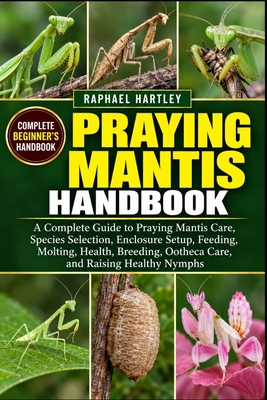
Discover the fascinating world of praying mantises and learn how to provide appropriate care from selecting the right species and designing an enclosure to feeding, molting, breeding, ootheca management, and raising healthy nymphs.
PRAYING MANTIS HANDBOOK is a complete practical guide for beginners, experienced invertebrate keepers, breeders, educators, and anyone fascinated by these remarkable predatory insects. Raphael Hartley combines essential biology with practical husbandry principles to help readers understand mantis behavior, prevent common mistakes, and manage every important stage of the life cycle.
Praying mantises are extraordinary hunters with specialized feeding behaviors, impressive camouflage, complex molting requirements, and species-specific environmental needs. Successful keeping depends on understanding these characteristics rather than treating every mantis species the same.
Inside this handbook, you'll discover:
- Praying mantis anatomy, natural history, behavior, life cycle, and adaptations
- How to research and select species appropriate for your experience and available resources
- What to look for when obtaining a healthy mantis from a responsible source
- Enclosure size, ventilation, climbing surfaces, d�cor, and secure setup principles
- Creating suitable temperature and humidity conditions for different species
- Lighting, misting, hydration, airflow, and environmental monitoring
- Choosing appropriately sized live prey and establishing practical feeding routines
- Understanding appetite changes and avoiding overfeeding or unsuitable prey
- Safe handling principles and minimizing unnecessary stress or injury
- Recognizing hunting, defensive, resting, grooming, and reproductive behaviors
- Understanding the molting cycle and why adequate vertical space is essential
- Preparing for molts and recognizing common signs of an approaching shed
- Preventing falls, incomplete molts, dehydration, and other molting complications
- Monitoring body condition, movement, appetite, limbs, eyes, abdomen, and general appearance
- Recognizing potential health problems and environmental warning signs
- Maintaining enclosure hygiene and reducing mold, mites, spoiled prey, and waste buildup
- Understanding sex differences, maturity, courtship, mating, and breeding preparation
- Managing breeding encounters carefully and reducing unnecessary risks
- Ootheca formation, identification, incubation, environmental management, and monitoring
- Preparing for hatching and managing large numbers of emerging nymphs
- Nymph housing, feeding, hydration, growth, separation, and reducing cannibalism
- Keeping records of molts, feeding, growth, breeding, ootheca production, and hatching
- Troubleshooting feeding refusal, poor molts, unsuitable humidity, escape risks, and breeding difficulties
- Responsible sourcing, breeding, rehoming, and disposal practices
PRAYING MANTIS HANDBOOK emphasizes that husbandry requirements vary significantly among species. Temperature, humidity, enclosure dimensions, ventilation, prey size, and reproductive management should always be based on the biology of the particular mantis being kept.
The guide also promotes responsible ownership. Keepers should understand local regulations, avoid collecting protected species, never release captive or non-native mantises into the environment, and plan suitable homes before producing large numbers of offspring.
Whether you are preparing for your first mantis, improving an existing enclosure, experiencing your first molt, planning a breeding project, or learning how to manage oothecae and nymphs, this handbook provides a dependable foundation.
Create better enclosures, feed appropriately, manage molts safely, raise healthier nymphs, and experience praying mantis keeping with greater knowledge, confide
Log in to write a review for this book.
No reviews yet. Be the first to share your opinion.
Biography not available.