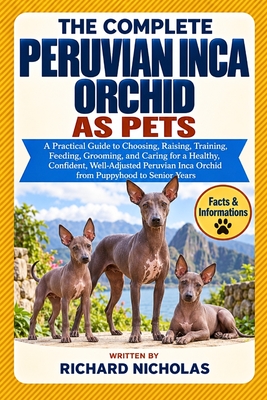
Cover of THE COMPLETE PERUVIAN INCA ORCHID AS PETS: A Practical Guide to Choosing, Raising, Training, Feeding, Grooming, and Caring for a Healthy, Confident, W by Nicholas, Richard, ISBN 9798174037601
Animals

THE COMPLETE PERUVIAN INCA ORCHID AS PETS: A Practical Guide to Choosing, Raising, Training, Feeding, Grooming, and Caring for a Healthy, Confident, W

Contributor(s): Author Format: Paperback

Paperback · ISBN 9798174037601

₹2,005 2%
₹2,056

Inclusive of GST and other taxes

100% Quality Assurance
No Account Creation Required
Fast Delivery
Secured Transactions

Arriving at your doorstep in 10-15 days

Our logisitcs team will make sure everyitem is delivered safely

Key Specifications

ISBN 9798174037601
Publisher Independently published
Publication date September 2026
Language English
MRP £15.94 GBP
Page count 130
Item weight 41 g
INTRODUCTION TO THE PERUVIAN INCA ORCHID
History and Ancient Origins
The Peruvian Inca Orchid is one of the oldest and most fascinating dog breeds in the world. Its history stretches back thousands of years to the ancient civilizations of Peru, long before the rise of the Inca Empire. Archaeological discoveries have uncovered pottery, textiles, and ceremonial artwork dating as far back as 750 A.D. that clearly depict dogs with the same elegant body, slender legs, and hairless appearance seen in today's Peruvian Inca Orchid. These discoveries confirm that the breed has been an important part of South American culture for centuries.
Although the breed is commonly associated with the Inca civilization, it actually predates the Incas by many generations. Earlier cultures such as the Moche, Chancay, Chim�, and Vic�s treasured these unique dogs and often included their images in artistic works and burial sites. Historians believe these dogs served multiple roles, acting as loyal companions, guardians, hunting assistants, and even spiritual symbols. Their presence in ancient tombs suggests they were highly respected and may have been believed to accompany their owners into the afterlife.
The hairless trait that makes the Peruvian Inca Orchid so distinctive is the result of a naturally occurring genetic mutation rather than selective breeding by humans. Over countless generations, this mutation became established within local dog populations. The warm climate of Peru allowed these hairless dogs to thrive, and their unique appearance became closely connected with the identity of several ancient cultures. Despite lacking fur, these dogs developed remarkable resilience and adapted well to their environment.
When Spanish explorers arrived in South America during the sixteenth century, many native dog breeds declined due to crossbreeding with European dogs and changes in local society. Fortunately, isolated rural villages continued to preserve the Peruvian Inca Orchid, allowing the breed to survive. In the twentieth century, dedicated breeders and conservationists recognized the breed's historical importance and worked to restore its population. Today, the Peruvian Inca Orchid is proudly recognized as Peru's national dog and serves as a living symbol of the country's rich cultural heritage.
Breed Development and Cultural Significance
Unlike many modern dog breeds that were created for specialized work, the Peruvian Inca Orchid developed naturally over centuries alongside the people of Peru. Early inhabitants valued dogs that were intelligent, adaptable, healthy, and capable of serving many different purposes. Natural selection favored dogs that could hunt small animals, alert families to danger, and provide companionship while remaining comfortable in Peru's varied landscapes.
As civilizations evolved, these dogs became more than working animals. They were deeply woven into everyday life and spiritual traditions. Many ancient Peruvians believed the dogs possessed healing qualities because of the warmth of their skin. People suffering from joint pain or arthritis sometimes allowed the dogs to rest against affected areas, believing the body heat helped relieve discomfort. While modern medicine has not confirmed these beliefs, the practice demonstrates the high regard in which the breed was held.