Fournier MD, Anthony J. Author
Biography not available.

Browse all FOLKLORE books
Browse all GARDENS books
Browse all GRAPHIC NOVELS books
Browse all HISTORY - MEDIEVAL books
Browse all HUMOUR books
Browse all Juvenile Fiction : Biographical - Other books
Browse all Juvenile Fiction : Historical - Other books
Browse all Juvenile Fiction : Legends, Myths, & Fables - Other books
Browse all Juvenile Fiction : People & Places - Other books
Browse all Juvenile Fiction : People & Places - United States - Other books
Browse all Juvenile Fiction : Religious - Other books
Browse all Juvenile Nonfiction : History - Other books
Browse all Juvenile Nonfiction : Mathematics - Advanced books
Browse all Juvenile Nonfiction : People & Places - Other books
Browse all Juvenile Nonfiction : People & Places - United States - Othe books
Browse all LITERARY STUDIES books
Browse all LONDON books
Browse all Medical : Nursing - Mental Health books
Browse all MIND books
Browse all MUSEOLOGY books
Browse all NON-CLASSIFIABLE books
Browse all NONLINEAR SCIENCE books
Browse all POPULAR SCIENCE books
Browse all RELIGIOUS STUDIES books
Browse all SPIRIT books
Browse all SPORT books
Browse all TRAVEL WRITING books
 Out of Stock
Paperback · ISBN 9798174401365
Inclusive of GST and other taxes
Arriving at your doorstep in 10-15 days
Our logisitcs team will make sure everyitem is delivered safely
| ISBN | 9798174401365 |
|---|---|
| Publisher | Independently published |
| Publication date | September 2026 |
| Language | English |
| MRP | £170.78 GBP |
| Page count | 462 |
| Item weight | 235 g |
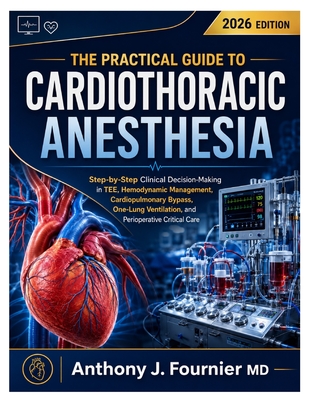
When a cardiothoracic patient suddenly becomes unstable, knowing the theory is not enough-you need to know what to do next.
A TEE finding appears.
The blood pressure drops.
The heart will not come off bypass.
One-lung ventilation becomes difficult.
A patient arrives in the ICU with rapidly changing physiology.
In these moments, the challenge is not simply understanding anesthesia. It is turning clinical information into the right decision at the right time.
That is where many learners struggle. They may know the terms, remember the drugs, and understand the physiology-but still hesitate when faced with a real patient.
The Practical Guide to Cardiothoracic Anesthesia takes a different approach.
Instead of asking you to memorize disconnected facts, it helps you think through cardiothoracic cases step by step: What are you seeing? What does it mean? What could be causing it? What should you do first? What should you reassess afterward?
You will learn how to approach:
TEE findings and connect them to the patient's clinical condition
Hemodynamic instability by identifying likely causes and choosing appropriate interventions
Cardiopulmonary bypass with attention to the major decisions before, during, and after bypass
One-lung ventilation when oxygenation, ventilation, or airway management becomes challenging
Cardiac and thoracic procedures with a practical focus on perioperative decision-making
Postoperative critical care when patients require continued monitoring and rapid reassessment
Common complications and unexpected changes using a structured clinical approach
The goal is not to make every case look simple. The goal is to give you a clear way to think when the case is not simple.
No unnecessary academic detours.
No memorization without clinical context.
No assuming you already know what to do next.
Instead, you get a practical framework for moving from finding → interpretation → decision → action → reassessment.
By working through this approach, you can move from:
"I recognize this finding, but I'm not sure what it means."
to:
"I know what I'm seeing, I understand what may be causing it, and I know how to approach the next step."
Whether you are learning cardiothoracic anesthesia for the first time, preparing for advanced training, or looking for a practical reference during clinical practice, this book is designed to help you connect knowledge with action.
For anesthesiology residents, fellows, practicing anesthesiologists, CRNAs, perfusionists, and other clinicians involved in cardiothoracic perioperative care, the value is simple: less guessing, clearer reasoning, and a more structured approach to difficult cases.
Every difficult case becomes harder when the next decision is unclear.
Build your clinical framework now-and approach cardiothoracic anesthesia with greater clarity and confidence.
Log in to write a review for this book.
No reviews yet. Be the first to share your opinion.
Biography not available.