Winterbourne, Barbara Author
Biography not available.

Browse all FOLKLORE books
Browse all GARDENS books
Browse all GRAPHIC NOVELS books
Browse all HISTORY - MEDIEVAL books
Browse all HUMOUR books
Browse all Juvenile Fiction : Biographical - Other books
Browse all Juvenile Fiction : Historical - Other books
Browse all Juvenile Fiction : Legends, Myths, & Fables - Other books
Browse all Juvenile Fiction : People & Places - Other books
Browse all Juvenile Fiction : People & Places - United States - Other books
Browse all Juvenile Fiction : Religious - Other books
Browse all Juvenile Nonfiction : History - Other books
Browse all Juvenile Nonfiction : Mathematics - Advanced books
Browse all Juvenile Nonfiction : People & Places - Other books
Browse all Juvenile Nonfiction : People & Places - United States - Othe books
Browse all LITERARY STUDIES books
Browse all LONDON books
Browse all Medical : Nursing - Mental Health books
Browse all MIND books
Browse all MUSEOLOGY books
Browse all NON-CLASSIFIABLE books
Browse all NONLINEAR SCIENCE books
Browse all POPULAR SCIENCE books
Browse all RELIGIOUS STUDIES books
Browse all SPIRIT books
Browse all SPORT books
Browse all TRAVEL WRITING books
 Out of Stock
Paperback · ISBN 9798174767775
Inclusive of GST and other taxes
Arriving at your doorstep in 10-15 days
Our logisitcs team will make sure everyitem is delivered safely
| ISBN | 9798174767775 |
|---|---|
| Publisher | Independently published |
| Publication date | September 2026 |
| Language | English |
| MRP | £39.58 GBP |
| Page count | 184 |
| Item weight | 42 g |
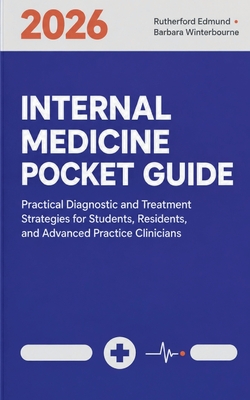
INTERNAL MEDICINE POCKET GUIDE
Internal medicine requires more than knowing diseases and memorizing treatment protocols. The clinician must interpret a patient's presentation, construct a useful differential diagnosis, decide which findings and tests matter, weigh probabilities, and continually revise the working diagnosis as new information emerges.
Internal Medicine Pocket Guide is a concise clinical reference organized around this process. It brings together the major domains of internal medicine while giving particular attention to the reasoning that connects patient presentation to diagnosis and management.
The book covers:
- Clinical reasoning and diagnostic approach
Problem representation, hypothesis generation, history and physical examination, hypothesis-driven testing, Bayesian reasoning, pre-test probability, likelihood ratios, and decision thresholds.
- Common cognitive errors
Anchoring, confirmation bias, availability bias, representativeness, diagnostic momentum, premature closure, and practical strategies for recognizing and mitigating them.
- Major areas of internal medicine
Cardiovascular medicine, pulmonary and critical care, gastroenterology and hepatology, nephrology, hematology and oncology, infectious diseases, rheumatology, neurology, endocrinology and metabolism, geriatrics and palliative care, and related clinical domains.
- Evidence-informed management
Approaches to common clinical problems, treatment considerations, practical nuances, and the relationship between clinical decisions, guidelines, and evidence.
- Clinical communication and professional practice
Documentation, hand-offs, interprofessional communication, ethics, high-value care, and considerations relevant to different healthcare settings and resource environments.
- Rapid-reference material
ICD-10 code examples, renal and electrolyte formulas, cardiovascular and respiratory calculations, selected adult reference ranges, renal and hepatic dosing adjustments, corticosteroid and opioid equivalency tables, empiric antibiotic spectrum, and selected guidelines and landmark trials.
The emphasis throughout is on how clinical information is interpreted and used, rather than encyclopedic coverage of every disease. Chapters are written as connected clinical discussions, allowing mechanisms, presentation, diagnostic reasoning, management, exceptions, and practical considerations to be understood together.
Designed for medical students, residents, and practicing clinicians, the guide can be read sequentially for structured learning or consulted selectively when reviewing a clinical problem.
It is intended as a practical foundation for clinical reasoning and bedside reference, while recommendations should always be considered alongside the individual patient, local protocols, current guidelines, and primary sources.
Log in to write a review for this book.
No reviews yet. Be the first to share your opinion.
Biography not available.
Biography not available.