Herzfeld, Judith Author
Biography not available.

Browse all FOLKLORE books
Browse all GARDENS books
Browse all GRAPHIC NOVELS books
Browse all HISTORY - MEDIEVAL books
Browse all HUMOUR books
Browse all Juvenile Fiction : Biographical - Other books
Browse all Juvenile Fiction : Historical - Other books
Browse all Juvenile Fiction : Legends, Myths, & Fables - Other books
Browse all Juvenile Fiction : People & Places - Other books
Browse all Juvenile Fiction : People & Places - United States - Other books
Browse all Juvenile Fiction : Religious - Other books
Browse all Juvenile Nonfiction : History - Other books
Browse all Juvenile Nonfiction : Mathematics - Advanced books
Browse all Juvenile Nonfiction : People & Places - Other books
Browse all Juvenile Nonfiction : People & Places - United States - Othe books
Browse all LITERARY STUDIES books
Browse all LONDON books
Browse all Medical : Nursing - Mental Health books
Browse all MIND books
Browse all MUSEOLOGY books
Browse all NON-CLASSIFIABLE books
Browse all NONLINEAR SCIENCE books
Browse all POPULAR SCIENCE books
Browse all RELIGIOUS STUDIES books
Browse all SPIRIT books
Browse all SPORT books
Browse all TRAVEL WRITING books
 Out of Stock
Paperback · ISBN 9798235297982
Inclusive of GST and other taxes
Arriving at your doorstep in 10-15 days
Our logisitcs team will make sure everyitem is delivered safely
| ISBN | 9798235297982 |
|---|---|
| Publisher | Magic Angle Press |
| Publication date | August 2026 |
| Language | English |
| MRP | £8.49 GBP |
| Page count | 96 |
| Item weight | 24 g |
If we could not have acted differently, what becomes of responsibility, meaning and the way we treat one another?
We praise achievement and blame wrongdoing. Yet when we reflect on someone's behavior, we look for causes in their circumstances, experiences and biology. What follows when we take those causes seriously, i.e., when we imagine that absent those causes the person would have acted differently?
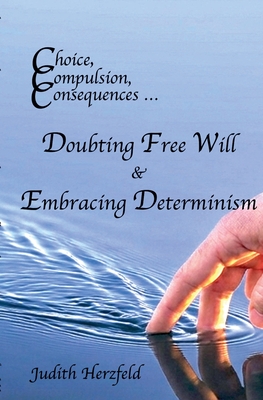
In Choice, Compulsion, Consequences ... Doubting Free Will & Embracing Determinism, Judith Herzfeld makes the affirmative case for embracing determinism.
Drawing on decades of scientific research and interdisciplinary teaching, Herzfeld connects theological dilemmas, discoveries in physics and neuroscience, and familiar experiences of choice and regret. She brings these perspectives together to examine the likelihood that, under the same internal and external conditions, a person could not have acted otherwise.
The implications reach into our closest relationships, our justice system and our public life. Herzfeld considers how society can respond to harmful behavior without assigning blame, how love and purposeful ac!on retain their meaning, and why the information we share carries responsibilities of its own.
Concise, yet wide in scope, this book invites readers to reconsider both their assumptions about human freedom and the consequences of those assumptions.
Throughout, learning and change remain consequential: understanding the causes of an ac!on can help us respond more constructively, while what we do today helps shape the circumstances of tomorrow.
Log in to write a review for this book.
No reviews yet. Be the first to share your opinion.
Biography not available.