Munrow, Danny Editor
Biography not available.

Browse all FOLKLORE books
Browse all GARDENS books
Browse all GRAPHIC NOVELS books
Browse all HISTORY - MEDIEVAL books
Browse all HUMOUR books
Browse all Juvenile Fiction : Biographical - Other books
Browse all Juvenile Fiction : Historical - Other books
Browse all Juvenile Fiction : Legends, Myths, & Fables - Other books
Browse all Juvenile Fiction : People & Places - Other books
Browse all Juvenile Fiction : People & Places - United States - Other books
Browse all Juvenile Fiction : Religious - Other books
Browse all Juvenile Nonfiction : History - Other books
Browse all Juvenile Nonfiction : Mathematics - Advanced books
Browse all Juvenile Nonfiction : People & Places - Other books
Browse all Juvenile Nonfiction : People & Places - United States - Othe books
Browse all LITERARY STUDIES books
Browse all LONDON books
Browse all Medical : Nursing - Mental Health books
Browse all MIND books
Browse all MUSEOLOGY books
Browse all NON-CLASSIFIABLE books
Browse all NONLINEAR SCIENCE books
Browse all POPULAR SCIENCE books
Browse all RELIGIOUS STUDIES books
Browse all SPIRIT books
Browse all SPORT books
Browse all TRAVEL WRITING books
 Out of Stock
Paperback · ISBN 9798247501602
Inclusive of GST and other taxes
Arriving at your doorstep in 10-15 days
Our logisitcs team will make sure everyitem is delivered safely
| ISBN | 9798247501602 |
|---|---|
| Publisher | Independently published |
| Publication date | February 2026 |
| Language | English |
| MRP | £22.03 GBP |
| Page count | 386 |
| Item weight | 103 g |
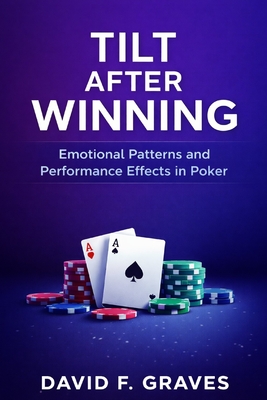
Most poker players are taught to fear tilt after a bad beat. Very few are prepared for what happens after they win.
Tilt After Winning: Emotional Patterns and Performance Effects in Poker explores one of the least discussed but most financially damaging psychological states in competitive play: post-win emotional drift. When confidence spikes, discipline often weakens. Risk thresholds shift. Pattern recognition becomes biased. Decisions that feel sharp and aggressive can quietly become structurally unsound.
This book breaks down the cognitive and emotional mechanisms that appear after positive outcomes, including:
Overconfidence cycles following large pots or session wins
Subtle shifts in risk tolerance and bet sizing behavior
Pattern projection and false edge detection after success
Emotional momentum and decision speed distortion
The performance decay curve across extended winning sessions
Using behavioral psychology, decision science, and real table dynamics, this guide shows how emotional pattern formation impacts long-term EV, session stability, and bankroll survival.
Designed for serious live and online players, this book focuses on observation, pattern awareness, and performance consistency rather than quick fixes or motivational theory. The goal is simple: maintain decision quality when the game is going well, not just when it is going badly.
Because for many players, the most expensive mistakes do not happen when they are losing. They happen when they believe they cannot lose.
Log in to write a review for this book.
No reviews yet. Be the first to share your opinion.
Biography not available.
Biography not available.