Kovac, Chad Author
Biography not available.

Browse all FOLKLORE books
Browse all GARDENS books
Browse all GRAPHIC NOVELS books
Browse all HISTORY - MEDIEVAL books
Browse all HUMOUR books
Browse all Juvenile Fiction : Biographical - Other books
Browse all Juvenile Fiction : Historical - Other books
Browse all Juvenile Fiction : Legends, Myths, & Fables - Other books
Browse all Juvenile Fiction : People & Places - Other books
Browse all Juvenile Fiction : People & Places - United States - Other books
Browse all Juvenile Fiction : Religious - Other books
Browse all Juvenile Nonfiction : History - Other books
Browse all Juvenile Nonfiction : Mathematics - Advanced books
Browse all Juvenile Nonfiction : People & Places - Other books
Browse all Juvenile Nonfiction : People & Places - United States - Othe books
Browse all LITERARY STUDIES books
Browse all LONDON books
Browse all Medical : Nursing - Mental Health books
Browse all MIND books
Browse all MUSEOLOGY books
Browse all NON-CLASSIFIABLE books
Browse all NONLINEAR SCIENCE books
Browse all POPULAR SCIENCE books
Browse all RELIGIOUS STUDIES books
Browse all SPIRIT books
Browse all SPORT books
Browse all TRAVEL WRITING books
 Out of Stock
Paperback · ISBN 9798249952464
Inclusive of GST and other taxes
Arriving at your doorstep in 10-15 days
Our logisitcs team will make sure everyitem is delivered safely
| ISBN | 9798249952464 |
|---|---|
| Publisher | Independently published |
| Publication date | February 2026 |
| Language | English |
| MRP | £7.40 GBP |
| Page count | 104 |
| Item weight | 31 g |
The clock in Room 204 skips a second at 10:47 every day.
Not a dramatic skip. The second hand moves from:12 to:14 and the missing beat falls into a gap that nobody notices because nobody is watching with the kind of attention that makes gaps visible.
Sive Okoro noticed.
She is twelve years old. She sits in the third row at Lincoln Middle School in Chicago. She has a composition notebook. She writes things down. On September 5th she wrote: Clock skip. 10:47:13. Duration of missing beat: 0.97 seconds.
Rel noticed the hum. An 18.9-hertz vibration in the building's walls, containing a pulse that repeated at 0.67 hertz. Greer noticed the shadows on the basketball court falling three degrees wrong every day. Fen noticed the substitute teacher who repeated herself in loops, the janitor who mopped in patterns too precise to be human.
Four kids. Four notebooks. One lunch table in the library.
They compared notes. They built a map. They discovered that the hallway between the gym and the east stairwell was three tiles longer on Tuesdays. They found a triangle on their map whose angles summed to 201 degrees.
Then they found Clara.
An old woman on Cortez Street who grew impossible herbs and baked cookies and knew what the world was running on. She told them they were observers. She told them about the Wardens, whose job was to make people forget. She told them what she was: a system function that had stopped functioning and started paying attention, and the attention had made her something the system didn't have a category for.
The system tried to erase it all. The anomalies vanished. The clock ticked correctly. Clara's apartment was empty, scrubbed so clean the walls didn't remember she'd lived there.
But the notebooks survived. The drawings survived. The data survived.
Because the system can edit itself. It cannot edit the people who noticed it.
The seams came back. The data held.
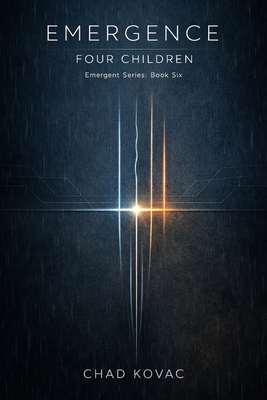
FOUR CHILDREN is a standalone novel for younger readers, set in the world of the Emergence series. It is about four twelve-year-olds who discover that paying attention is the most powerful and most dangerous thing a person can do.
The world has seams. These kids found them.
Log in to write a review for this book.
No reviews yet. Be the first to share your opinion.
Biography not available.