Dunavant, Clinton S. Author
Biography not available.

Browse all FOLKLORE books
Browse all GARDENS books
Browse all GRAPHIC NOVELS books
Browse all HISTORY - MEDIEVAL books
Browse all HUMOUR books
Browse all Juvenile Fiction : Biographical - Other books
Browse all Juvenile Fiction : Historical - Other books
Browse all Juvenile Fiction : Legends, Myths, & Fables - Other books
Browse all Juvenile Fiction : People & Places - Other books
Browse all Juvenile Fiction : People & Places - United States - Other books
Browse all Juvenile Fiction : Religious - Other books
Browse all Juvenile Nonfiction : History - Other books
Browse all Juvenile Nonfiction : Mathematics - Advanced books
Browse all Juvenile Nonfiction : People & Places - Other books
Browse all Juvenile Nonfiction : People & Places - United States - Othe books
Browse all LITERARY STUDIES books
Browse all LONDON books
Browse all Medical : Nursing - Mental Health books
Browse all MIND books
Browse all MUSEOLOGY books
Browse all NON-CLASSIFIABLE books
Browse all NONLINEAR SCIENCE books
Browse all POPULAR SCIENCE books
Browse all RELIGIOUS STUDIES books
Browse all SPIRIT books
Browse all SPORT books
Browse all TRAVEL WRITING books
 Out of Stock
Paperback · ISBN 9798255062447
Inclusive of GST and other taxes
Arriving at your doorstep in 10-15 days
Our logisitcs team will make sure everyitem is delivered safely
| ISBN | 9798255062447 |
|---|---|
| Publisher | Independently published |
| Publication date | April 2026 |
| Language | English |
| MRP | £14.40 GBP |
| Page count | 150 |
| Item weight | 60 g |
Building an AI demo is easy. Building an AI system that stays reliable when retrieval is noisy, tools fail, context is incomplete, and users expect consistent answers is where most teams struggle. Too many projects promise intelligent automation, yet collapse under weak architecture, poor observability, brittle prompts, and unreliable workflow design.
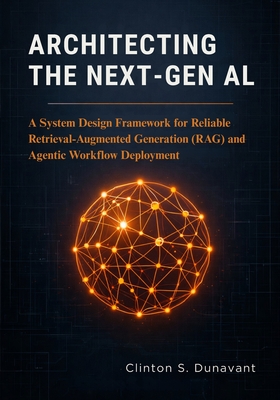
Architecting the Next-Gen AI addresses that problem head-on. This book presents a practical system design framework for building production-ready AI applications powered by Retrieval-Augmented Generation, agentic workflows, structured orchestration, and dependable deployment patterns. Grounded in the manuscript's emphasis on architecture, boundaries, determinism, retrieval quality, and operational trust, it treats the language model as one component inside a larger, controlled system rather than the entire application.
Inside, readers will learn how to design scalable RAG pipelines, structure context for stronger response quality, deploy agentic systems with clear guardrails, integrate tools safely, manage orchestration across workflows, and improve reliability through evaluation, telemetry, security, and cost-aware performance tuning. The result is a clearer path from prototype to production for engineers, architects, and technical leaders who need AI systems that do more than impress in a demo.
Whether the goal is to build enterprise AI platforms, improve LLM system design, strengthen AI architecture, or deploy reliable agent workflows that teams can actually trust, this book offers a focused blueprint for doing the work well.
Log in to write a review for this book.
No reviews yet. Be the first to share your opinion.
Biography not available.