Martins, David Author
Biography not available.

Browse all FOLKLORE books
Browse all GARDENS books
Browse all GRAPHIC NOVELS books
Browse all HISTORY - MEDIEVAL books
Browse all HUMOUR books
Browse all Juvenile Fiction : Biographical - Other books
Browse all Juvenile Fiction : Historical - Other books
Browse all Juvenile Fiction : Legends, Myths, & Fables - Other books
Browse all Juvenile Fiction : People & Places - Other books
Browse all Juvenile Fiction : People & Places - United States - Other books
Browse all Juvenile Fiction : Religious - Other books
Browse all Juvenile Nonfiction : History - Other books
Browse all Juvenile Nonfiction : Mathematics - Advanced books
Browse all Juvenile Nonfiction : People & Places - Other books
Browse all Juvenile Nonfiction : People & Places - United States - Othe books
Browse all LITERARY STUDIES books
Browse all LONDON books
Browse all Medical : Nursing - Mental Health books
Browse all MIND books
Browse all MUSEOLOGY books
Browse all NON-CLASSIFIABLE books
Browse all NONLINEAR SCIENCE books
Browse all POPULAR SCIENCE books
Browse all RELIGIOUS STUDIES books
Browse all SPIRIT books
Browse all SPORT books
Browse all TRAVEL WRITING books
 Out of Stock
Paperback · ISBN 9798278991809
Inclusive of GST and other taxes
Arriving at your doorstep in 10-15 days
Our logisitcs team will make sure everyitem is delivered safely
| ISBN | 9798278991809 |
|---|---|
| Publisher | Independently published |
| Publication date | December 2025 |
| Language | English |
| MRP | £14.19 GBP |
| Page count | 376 |
| Item weight | 111 g |
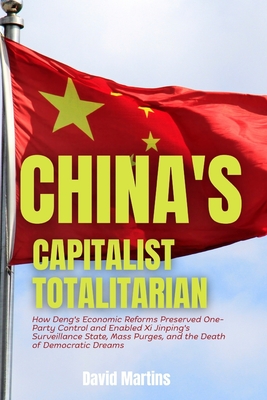
The world got China wrong. Catastrophically wrong.
For decades, Western leaders, economists, and policymakers believed a comforting narrative: that China's embrace of capitalism would inevitably lead to democracy, openness, and political freedom. Markets would create a middle class. The middle class would demand rights. Authoritarianism would crumble.
Instead, China became the world's most sophisticated totalitarian state-backed by the second-largest economy on earth.
This groundbreaking book reveals exactly how it happened.
When Deng Xiaoping launched China's historic reforms in 1979, the world celebrated the death of Maoism. Foreign investment poured in. Private entrepreneurship exploded. China's GDP soared. Surely, democracy was just around the corner.
But Deng had a different plan. While unleashing market forces, he deliberately preserved every institutional foundation of totalitarianism-the surveillance apparatus, ideological control mechanisms, party dominance over key economic sectors, and the repressive infrastructure that could crush dissent at any moment. Capitalism wasn't dismantling the one-party state. It was financing it.
The Fragile Balance That Couldn't LastFor two decades after Tiananmen Square, China existed in a precarious equilibrium. Competing party factions checked each other's power. Collective leadership prevented the rise of another Mao. Reformers pushed for gradual liberalization. The dream of a freer China seemed dormant but not dead.
Then came Xi Jinping.
The Resurrection of Total ControlWith ruthless precision, Xi dismantled the political order his predecessors had carefully constructed. He revived every dormant totalitarian practice in the Communist playbook:
→ Personalistic rule that concentrates unprecedented power in one man's hands
→ Cult of personality unseen since Mao's era
→ Permanent purges disguised as anti-corruption campaigns, eliminating rivals and terrorizing elites
→ Mass surveillance powered by AI, facial recognition, and social credit systems that track citizens' every move
→ Ideological indoctrination that crushes independent thought in schools, media, and workplaces
→ Aggressive nationalism that replaces Deng's cautious foreign policy with wolf warrior diplomacy
→ Economic stranglehold that suffocates private entrepreneurship while empowering state-owned giants
This meticulously researched exposé reveals the fatal flaw in China's modernization project: you cannot build sustainable prosperity on totalitarian foundations.
Today's China faces mounting crises that Xi's iron fist cannot solve:
- Economic stagnation as entrepreneurship withers under state control - International isolation as democracies unite against Chinese aggression
- Demographic collapse that threatens future growth - Elite paranoia where even the wealthy and powerful live in fear - Innovation drain as the best minds flee or stay silent - Inevitable instability built into a system dependent on one man's judgment
Whether you're a policymaker, business leader, student, or concerned citizen, this book provides the comprehensive framework you need to understand:
✓ Why Western engagement policies failed to democratize China ✓ How economic reform can strengthen rather than weaken authoritarianism
✓ What institutional factors made Xi's totalitarian restoration possible ✓ Why China's current trajectory threatens both its own people and global stability ✓ What the future holds for the world's most formidable one-party state
If you read one book to understand how China went from reform to repression, from opening to isolation, from collective leadership t
Log in to write a review for this book.
No reviews yet. Be the first to share your opinion.
Biography not available.