Petault, David Author
Biography not available.

Browse all FOLKLORE books
Browse all GARDENS books
Browse all GRAPHIC NOVELS books
Browse all HISTORY - MEDIEVAL books
Browse all HUMOUR books
Browse all Juvenile Fiction : Biographical - Other books
Browse all Juvenile Fiction : Historical - Other books
Browse all Juvenile Fiction : Legends, Myths, & Fables - Other books
Browse all Juvenile Fiction : People & Places - Other books
Browse all Juvenile Fiction : People & Places - United States - Other books
Browse all Juvenile Fiction : Religious - Other books
Browse all Juvenile Nonfiction : History - Other books
Browse all Juvenile Nonfiction : Mathematics - Advanced books
Browse all Juvenile Nonfiction : People & Places - Other books
Browse all Juvenile Nonfiction : People & Places - United States - Othe books
Browse all LITERARY STUDIES books
Browse all LONDON books
Browse all Medical : Nursing - Mental Health books
Browse all MIND books
Browse all MUSEOLOGY books
Browse all NON-CLASSIFIABLE books
Browse all NONLINEAR SCIENCE books
Browse all POPULAR SCIENCE books
Browse all RELIGIOUS STUDIES books
Browse all SPIRIT books
Browse all SPORT books
Browse all TRAVEL WRITING books
 Out of Stock
Paperback · ISBN 9798308641285
Inclusive of GST and other taxes
Arriving at your doorstep in 10-15 days
Our logisitcs team will make sure everyitem is delivered safely
| ISBN | 9798308641285 |
|---|---|
| Publisher | Independently published |
| Publication date | January 2025 |
| Language | English |
| MRP | £9.99 GBP |
| Page count | 226 |
| Item weight | 62 g |
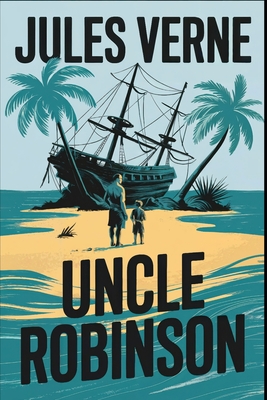
A family shipwrecked on an uninhabited island. Survival through ingenuity and cooperation. And Jules Verne's earliest attempt at the castaway story-unpublished for over a century.
Written around 1861-1862, Uncle Robinson represents Verne's apprentice work-his first sustained engagement with the Robinsonnade tradition that he would later master in The Mysterious Island. A family consisting of uncle, siblings, and young nephew must survive on an isolated island, using practical knowledge and resourcefulness to overcome challenges.
Publisher Pierre-Jules Hetzel rejected the manuscript, apparently finding it too conventional to warrant publication. Verne never sought publication elsewhere, moving forward instead to develop the Voyages Extraordinaires series that would make him legendary. The novel remained unpublished until 1991, appearing more than a century after his death.
Uncle Robinson demonstrates characteristics that would define Verne's mature work: attention to technical detail, emphasis on practical knowledge as tool for survival, faith in human ingenuity. Yet it also reveals his early limitations: thin characterization reducing family members to types, episodic structure lacking dramatic arc, plotting that follows Robinsonnade formula without distinctive innovation, workmanlike prose that hasn't yet achieved his later narrative efficiency.
The novel's value lies primarily in what it reveals about Verne's development-showing him learning his craft before achieving the synthesis of education and imagination that would revolutionize popular fiction. It's apprentice work, historically interesting but artistically inferior to the mature novels that justified his enduring reputation.
For scholars and devoted Verne enthusiasts, it offers glimpse of his evolution. For general readers, it demonstrates that even great writers produce forgettable early work before finding their distinctive voice.
Jules Verne's first castaway story-a literary curiosity showing a master learning his craft, not a lost masterpiece.
Log in to write a review for this book.
No reviews yet. Be the first to share your opinion.
Biography not available.
Biography not available.