Del Re, Francesco Author
Biography not available.

Browse all FOLKLORE books
Browse all GARDENS books
Browse all GRAPHIC NOVELS books
Browse all HISTORY - MEDIEVAL books
Browse all HUMOUR books
Browse all Juvenile Fiction : Biographical - Other books
Browse all Juvenile Fiction : Historical - Other books
Browse all Juvenile Fiction : Legends, Myths, & Fables - Other books
Browse all Juvenile Fiction : People & Places - Other books
Browse all Juvenile Fiction : People & Places - United States - Other books
Browse all Juvenile Fiction : Religious - Other books
Browse all Juvenile Nonfiction : History - Other books
Browse all Juvenile Nonfiction : Mathematics - Advanced books
Browse all Juvenile Nonfiction : People & Places - Other books
Browse all Juvenile Nonfiction : People & Places - United States - Othe books
Browse all LITERARY STUDIES books
Browse all LONDON books
Browse all Medical : Nursing - Mental Health books
Browse all MIND books
Browse all MUSEOLOGY books
Browse all NON-CLASSIFIABLE books
Browse all NONLINEAR SCIENCE books
Browse all POPULAR SCIENCE books
Browse all RELIGIOUS STUDIES books
Browse all SPIRIT books
Browse all SPORT books
Browse all TRAVEL WRITING books
 Out of Stock
Paperback · ISBN 9798868831768
Inclusive of GST and other taxes
Arriving at your doorstep in 10-15 days
Our logisitcs team will make sure everyitem is delivered safely
| ISBN | 9798868831768 |
|---|---|
| Publisher | Apress |
| Publication date | September 2026 |
| Language | English |
| MRP | £54.99 GBP |
| Page count | 428 |
| Item weight | 132 g |
Software systems fail. The expensive part is not the failure itself but the recovery: manual restarts, replayed jobs, drained queues, and configuration changes performed under pressure at inconvenient hours. Most teams already know the corrective actions for their common incidents. What they lack is an architecture that can apply those actions without waiting for a human to intervene every time.
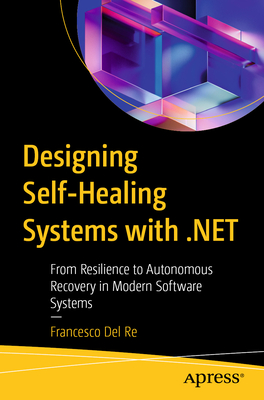
This book brings recovery into the architecture. It treats self-healing as a design discipline and provides a reference architecture that organizes detection, decision, safety, execution, and verification into a coherent control loop. It then delivers a concrete reference implementation in .NET, mapping every architectural layer to explicit contracts and components that teams can study, adapt, and extend.
The architecture is grounded in production experience on a large distributed platform that connected dozens of public administrations through document exchange flows. As external integrations multiplied, each new dependency brought failure modes that demanded their own detection logic and recovery strategies. The design described in these pages emerged from that growth, and the anecdotes, case studies, and decisions throughout the text reflect that origin.
The treatment goes beyond cloud-native microservices. It covers monoliths, legacy systems, hybrid environments, batch processing, messaging, and queue-centered workloads. It addresses the operating model as well: governance, safety boundaries, adoption roadmap, anti-patterns, and organizational roles. No existing title combines a self-healing reference architecture with a .NET reference implementation, and I believe this book addresses a gap that practicing .NET architects will recognize.
What You Will Learn:
Who This Book is For
The primary audience is .NET software architects and senior developers who design and operate backend systems, distributed services, messaging platforms, and integration layers. These professionals deal with production reliability challenges and are looking for a structured approach to automated recovery beyond ad-hoc retry logic and restart scripts.
Log in to write a review for this book.
No reviews yet. Be the first to share your opinion.
Biography not available.