Gorky, Maxim Author
Biography not available.

Browse all FOLKLORE books
Browse all GARDENS books
Browse all GRAPHIC NOVELS books
Browse all HISTORY - MEDIEVAL books
Browse all HUMOUR books
Browse all Juvenile Fiction : Biographical - Other books
Browse all Juvenile Fiction : Historical - Other books
Browse all Juvenile Fiction : Legends, Myths, & Fables - Other books
Browse all Juvenile Fiction : People & Places - Other books
Browse all Juvenile Fiction : People & Places - United States - Other books
Browse all Juvenile Fiction : Religious - Other books
Browse all Juvenile Nonfiction : History - Other books
Browse all Juvenile Nonfiction : Mathematics - Advanced books
Browse all Juvenile Nonfiction : People & Places - Other books
Browse all Juvenile Nonfiction : People & Places - United States - Othe books
Browse all LITERARY STUDIES books
Browse all LONDON books
Browse all Medical : Nursing - Mental Health books
Browse all MIND books
Browse all MUSEOLOGY books
Browse all NON-CLASSIFIABLE books
Browse all NONLINEAR SCIENCE books
Browse all POPULAR SCIENCE books
Browse all RELIGIOUS STUDIES books
Browse all SPIRIT books
Browse all SPORT books
Browse all TRAVEL WRITING books
 Out of Stock
Hardback · ISBN 9798888301203
Inclusive of GST and other taxes
Arriving at your doorstep in 10-15 days
Our logisitcs team will make sure everyitem is delivered safely
| ISBN | 9798888301203 |
|---|---|
| Publisher | Bibliotech Press |
| Publication date | January 2023 |
| Language | English |
| MRP | £22.95 GBP |
| Page count | 266 |
| Item weight | 109 g |
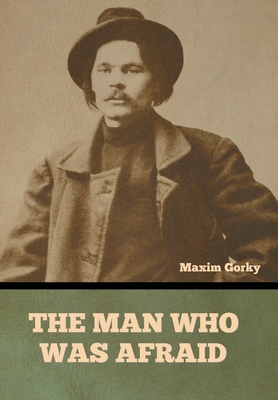
Alexei Maximovich Peshkov (28 March [O.S. 16 March] 1868 - 18 June 1936), popularly known as Maxim Gorky, was a Russian writer and political activist. He was nominated five times for the Nobel Prize in Literature. Before his success as an author, he travelled widely across the Russian Empire changing jobs frequently, experiences which would later influence his writing.
Gorky's most famous works are a short story collection Sketches and Stories (1899), plays The Philistines (1901), The Lower Depths (1902) and Children of the Sun (1905), a poem The Song of the Stormy Petrel (1901), his autobiographical trilogy My Childhood, In the World, My Universities (1913-1923), and a novel Mother (1906). Gorky himself judged some of these works as failures, and Mother has been frequently criticized (Gorky himself thought of Mother as one of his biggest failures). However, there have been warmer judgements of some less-known post-revolutionary works such as the cycles Fragments from My Diary (1924) and Stories of 1922-1924 (1925), the novels The Artamonov Business (1925) and The Life of Klim Samgin (1925-1936); the latter is considered Gorky's masterpiece and sometimes being viewed by critics as a modernist work. Unlike his pre-revolutionary writings (known for their "anti-psychologism"), these differ with an ambivalent portrayal of the Russian Revolution and "unmodern interest to human psychology" (as noted by D. S. Mirsky). He had associations with fellow Russian writers Leo Tolstoy and Anton Chekhov; Gorky would later mention them in his memoirs.
Gorky was active in the emerging Marxist communist movement. He publicly opposed the Tsarist regime, and for a time closely associated himself with Lenin and Bogdanov's Bolshevik wing of the party. For a significant part of his life, he was exiled from Russia and later the Soviet Union. In 1932, he returned to the USSR on Joseph Stalin's personal invitation and lived there until his death in June 1936. After his return he was officially declared the "founder of Socialist Realism". Despite his official reputation, Gorky's relations with the Soviet regime were rather difficult. Modern scholars consider his ideology of God-Building as distinct from the official Marxism-Leninism, and his work fits uneasily under the Socialist Realist label. His work remains controversial. (wikipedia.org)
Log in to write a review for this book.
No reviews yet. Be the first to share your opinion.
Biography not available.