Marryat, Frederick Author
Biography not available.

Browse all FOLKLORE books
Browse all GARDENS books
Browse all GRAPHIC NOVELS books
Browse all HISTORY - MEDIEVAL books
Browse all HUMOUR books
Browse all Juvenile Fiction : Biographical - Other books
Browse all Juvenile Fiction : Historical - Other books
Browse all Juvenile Fiction : Legends, Myths, & Fables - Other books
Browse all Juvenile Fiction : People & Places - Other books
Browse all Juvenile Fiction : People & Places - United States - Other books
Browse all Juvenile Fiction : Religious - Other books
Browse all Juvenile Nonfiction : History - Other books
Browse all Juvenile Nonfiction : Mathematics - Advanced books
Browse all Juvenile Nonfiction : People & Places - Other books
Browse all Juvenile Nonfiction : People & Places - United States - Othe books
Browse all LITERARY STUDIES books
Browse all LONDON books
Browse all Medical : Nursing - Mental Health books
Browse all MIND books
Browse all MUSEOLOGY books
Browse all NON-CLASSIFIABLE books
Browse all NONLINEAR SCIENCE books
Browse all POPULAR SCIENCE books
Browse all RELIGIOUS STUDIES books
Browse all SPIRIT books
Browse all SPORT books
Browse all TRAVEL WRITING books
 Out of Stock
Paperback · ISBN 9798897731428
Inclusive of GST and other taxes
Arriving at your doorstep in 10-15 days
Our logisitcs team will make sure everyitem is delivered safely
| ISBN | 9798897731428 |
|---|---|
| Publisher | Bibliotech Press |
| Publication date | May 2025 |
| Language | English |
| MRP | £11.95 GBP |
| Page count | 222 |
| Item weight | 61 g |
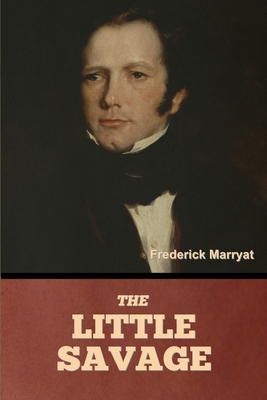
The Little Savage is a novel by Frederick Marryat, a British Royal Navy officer and author known for his adventure stories, particularly those set at sea. Published posthumously in 1848, the novel is one of Marryat's later works and reflects his signature themes of survival, morality, and personal growth.
The story follows Frank Henniker, a young boy who becomes stranded on a deserted island after a shipwreck. Initially, he is accompanied by an older sailor, Jackson, who is cruel and abusive. After Jackson's death, Frank is left entirely alone and must learn to survive in the wild.
Over time, Frank matures through his struggles, learning self-reliance and moral lessons. His isolation is eventually broken when he rescues a young Indigenous girl, Rolfe, from a group of hostile natives. The two form a bond, and Frank begins to develop empathy and a sense of responsibility.
The novel explores themes of civilization vs. savagery, as Frank transitions from a frightened, dependent boy into a capable and morally conscious individual. The arrival of a European ship later in the story brings new challenges, forcing Frank to reconcile his solitary existence with the return to society.
While not as famous as Marryat's Children of the New Forest or Mr. Midshipman Easy, The Little Savage remains an interesting example of 19th-century adventure literature. It shares similarities with other castaway narratives but stands out for its focus on psychological and moral development.
About the Author
Captain Frederick Marryat CB FRS (10 July 1792 - 9 August 1848) was a Royal Navy officer and novelist. He is noted today as an early pioneer of nautical fiction, particularly for his semi-autobiographical novel Mr Midshipman Easy (1836). He is remembered also for his children's novel The Children of the New Forest (1847). In addition, he developed a widely used system of maritime flag signalling, known as Marryat's Code.
From 1832 to 1835, Marryat edited The Metropolitan Magazine. Additionally, he kept writing novels; his biggest success came with Mr Midshipman Easy in 1836. He lived in Brussels for a year, travelled in Canada and the United States, and moved to London in 1839, where he was in the literary circle of Charles Dickens and others. He was in North America in 1837 when rebellion broke out in Lower Canada, and served with the expeditionary force sent to suppress it.
Marryat's novels are typical of their time, with concerns of family connections and social status often overshadowing the naval action. He based much of his fiction on his 25 years' experience at sea. Among those who admired his works were Mark Twain, Joseph Conrad, and Ernest Hemingway. As the first nautical novels, they served as models for 20th century works by C. S. Forester and Patrick O'Brian. These also were set in the time of Nelson and told of young men rising through the ranks due to their successes as naval officers.
Marryat was also known for short writings on nautical subjects. These short stories, plays, pieces of travel journalism, and essays were published in The Metropolitan Magazine, and many were later collected in book form as Olla Podrida.
Marryat's 1839 Gothic novel The Phantom Ship contained "The White Wolf of the Hartz Mountains". This featured the first female werewolf to appear in a short story.
.... (wikipedia.org)
Log in to write a review for this book.
No reviews yet. Be the first to share your opinion.
Biography not available.