Foster, Martin Author
Biography not available.

Browse all FOLKLORE books
Browse all GARDENS books
Browse all GRAPHIC NOVELS books
Browse all HISTORY - MEDIEVAL books
Browse all HUMOUR books
Browse all Juvenile Fiction : Biographical - Other books
Browse all Juvenile Fiction : Historical - Other books
Browse all Juvenile Fiction : Legends, Myths, & Fables - Other books
Browse all Juvenile Fiction : People & Places - Other books
Browse all Juvenile Fiction : People & Places - United States - Other books
Browse all Juvenile Fiction : Religious - Other books
Browse all Juvenile Nonfiction : History - Other books
Browse all Juvenile Nonfiction : Mathematics - Advanced books
Browse all Juvenile Nonfiction : People & Places - Other books
Browse all Juvenile Nonfiction : People & Places - United States - Othe books
Browse all LITERARY STUDIES books
Browse all LONDON books
Browse all Medical : Nursing - Mental Health books
Browse all MIND books
Browse all MUSEOLOGY books
Browse all NON-CLASSIFIABLE books
Browse all NONLINEAR SCIENCE books
Browse all POPULAR SCIENCE books
Browse all RELIGIOUS STUDIES books
Browse all SPIRIT books
Browse all SPORT books
Browse all TRAVEL WRITING books
 Out of Stock
Paperback · ISBN 9798900421742
Inclusive of GST and other taxes
Arriving at your doorstep in 10-15 days
Our logisitcs team will make sure everyitem is delivered safely
| ISBN | 9798900421742 |
|---|---|
| Publisher | PublishDrive |
| Publication date | September 2026 |
| Language | English |
| MRP | £14.99 GBP |
| Page count | 142 |
| Item weight | 44 g |
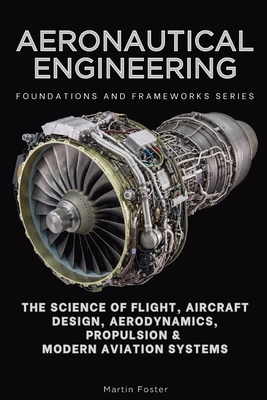
Aeronautical engineering explains why 800,000 pounds of Boeing 747 stays six miles above the ground at 550 miles per hour, held up by nothing but air. This book takes you from the four forces acting on a wing to the design of a complete aircraft.
Ten chapters build in order, each resting on the one before it. The math appears where it does real work and gets explained when it shows up, so no engineering background is needed to follow the reasoning.
Real aircraft carry the explanations throughout, from the U-2 and the F-16 to the Boeing 787 and the GE90 turbofan.
The chapters work through:
- The four forces, the International Standard Atmosphere, and why density altitude grounded regional jets in Phoenix when the temperature hit 120 degrees
- The core aerodynamics equations of continuity, momentum, and energy, plus Reynolds number, dynamic similarity, and scale model testing in wind tunnels
- Airfoil geometry, NACA section families, angle of attack, the stall, aspect ratio, and the planform choices behind sweep, taper, twist, and dihedral
- Laminar and turbulent boundary layers, skin friction, form drag, and induced drag
- Mach regimes, shock waves, critical Mach number, the area rule, and the aerodynamic heating that stretched Concorde's fuselage several inches at cruise
- Spars, ribs, stringers, semi-monocoque construction, aluminum and titanium and carbon fiber, and how fatigue sets a limit on airframe life
- Propeller blade theory, the Brayton cycle, turbofan bypass ratio, afterburners, thrust reversers, ramjets, and rockets
- Range and endurance from the Breguet equations, plus takeoff roll, climb gradient, glide ratio, and landing distance
- Static and dynamic stability, center of gravity limits, fly-by-wire control laws, autopilot and cockpit displays
- The design spiral, certification and airworthiness standards, uncrewed aircraft, electric propulsion, and sustainable aviation fuels
Written for three readers in particular:
- Students heading into an aerospace program who want the whole picture before coursework breaks it into separate subjects
- Pilots who follow procedures by habit and want the reasoning underneath them
- Anyone who watches an airliner climb out and wonders what holds it up
Each chapter closes with questions, and worked example responses sit in the back so you can check your reasoning rather than guess at it. A decade-by-decade timeline traces the field from Cayley's silver disc to electric flight, a glossary keeps every term in one place, and a further reading list points you toward the books worth picking up next.
Once you reach the end, you'll be able to look at almost any flying machine and read it: the length of its wings, how far they sweep back, the size and placement of its engines, the shape of its tail. Every one of those is an answer to a problem covered in these pages.
Log in to write a review for this book.
No reviews yet. Be the first to share your opinion.
Biography not available.