Ramsey, Bert Hansel Author
Biography not available.

Browse all FOLKLORE books
Browse all GARDENS books
Browse all GRAPHIC NOVELS books
Browse all HISTORY - MEDIEVAL books
Browse all HUMOUR books
Browse all Juvenile Fiction : Biographical - Other books
Browse all Juvenile Fiction : Historical - Other books
Browse all Juvenile Fiction : Legends, Myths, & Fables - Other books
Browse all Juvenile Fiction : People & Places - Other books
Browse all Juvenile Fiction : People & Places - United States - Other books
Browse all Juvenile Fiction : Religious - Other books
Browse all Juvenile Nonfiction : History - Other books
Browse all Juvenile Nonfiction : Mathematics - Advanced books
Browse all Juvenile Nonfiction : People & Places - Other books
Browse all Juvenile Nonfiction : People & Places - United States - Othe books
Browse all LITERARY STUDIES books
Browse all LONDON books
Browse all Medical : Nursing - Mental Health books
Browse all MIND books
Browse all MUSEOLOGY books
Browse all NON-CLASSIFIABLE books
Browse all NONLINEAR SCIENCE books
Browse all POPULAR SCIENCE books
Browse all RELIGIOUS STUDIES books
Browse all SPIRIT books
Browse all SPORT books
Browse all TRAVEL WRITING books
 Out of Stock
Paperback · ISBN 9798907337435
Inclusive of GST and other taxes
Arriving at your doorstep in 10-15 days
Our logisitcs team will make sure everyitem is delivered safely
| ISBN | 9798907337435 |
|---|---|
| Publisher | Staten House |
| Publication date | September 2026 |
| Language | English |
| MRP | £12.68 GBP |
| Page count | 150 |
| Item weight | 47 g |
When DID Changes the Rules of Ordinary Relationship Problems
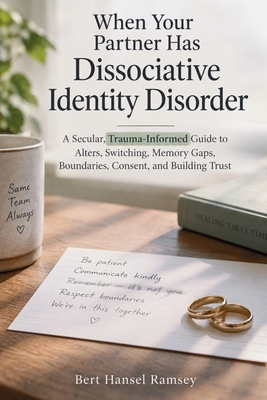
When your partner has dissociative identity disorder, familiar relationship questions can become harder to answer. What do you do when an important conversation is forgotten, a switch changes who is present, a trigger interrupts intimacy, or different parts have conflicting needs? How do you stay supportive without giving up consent, safety, trust, or your own boundaries?
What This Book Helps You Do
When Your Partner Has Dissociative Identity Disorder is a secular, trauma-informed guide for spouses and partners who want clear information and practical tools for daily life with DID. It explains alters and identity states, switching, dissociative amnesia, triggers, grounding, and common treatment concepts in plain language, then shows how those realities can affect communication, conflict, intimacy, household responsibilities, and long-term trust.
You will learn how to respond more calmly to possible switching, handle memory gaps without automatically assuming dishonesty, make important agreements easier to remember, discuss boundaries that apply to the shared relationship, prepare for crises before decisions become urgent, and support treatment without taking on the role of therapist.
A Practical Framework for Shared Life
The book is organized around five relationship priorities: safety, consent, continuity, boundaries, and support. Rather than treating DID as a collection of unusual symptoms, it focuses on the ordinary adult problems that dissociation can complicate. Practical tools include a first-minutes switching plan, memory-support systems, grounding preference sheets, relationship agreements, consent check-ins, crisis planning, household continuity tools, and partner capacity checks.
The approach is clinically informed without turning the book into a textbook. It also separates diagnostic language from community terms such as alters, parts, system, fronting, and protectors, so readers can understand the language they may hear without mistaking every informal label for a clinical category.
Who This Book Is For
This book is for readers who are married to or dating an adult with DID; partners trying to understand switching, amnesia, and changes in connection; couples who need clearer agreements around boundaries, monogamy or polyamory, touch, sex, money, or household responsibilities; and supporters who want to help without becoming responsible for another adult's treatment or recovery.
A Clearer Way to Support the Relationship
DID can change how a couple handles memory, communication, safety, and consent, but it does not erase the need for mutual respect or personal limits. If you want a practical partner guide that takes dissociation seriously while keeping the relationship itself in view, this book offers a structured place to begin.
Log in to write a review for this book.
No reviews yet. Be the first to share your opinion.
Biography not available.